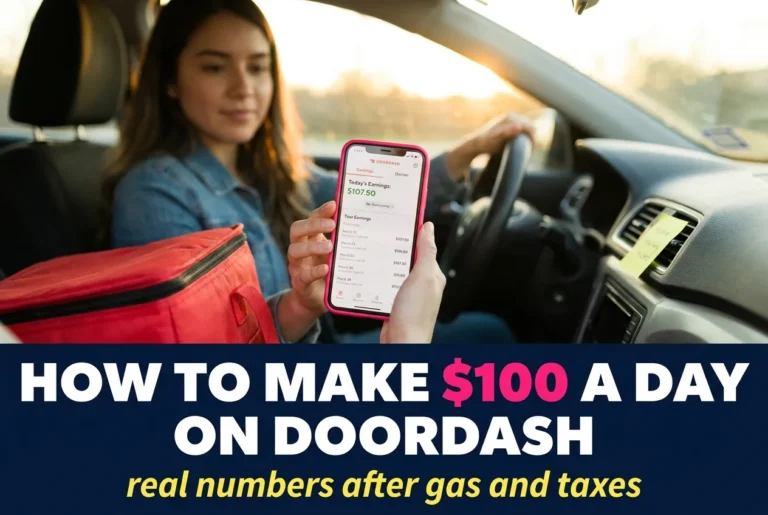

DoorDash vs Uber Eats — which one actually puts more money in your pocket? If you’re looking at food delivery as a side hustle in 2026, this is probably the first question on your mind. Both apps promise flexible earnings and the freedom to work on your own schedule, but the pay structures, order volume, and driver experiences are surprisingly different.
After analyzing real driver data, platform features, and the hidden costs most comparison guides ignore, here’s a complete breakdown to help you decide which delivery app is worth your time — or whether you should just run both.
DoorDash vs Uber Eats: Quick Overview
Before diving into the details, here’s what each platform actually is.
DoorDash launched in 2013 and has grown into the largest food delivery platform in the United States. It commands roughly 65% of the U.S. food delivery market share, partnering with over 390,000 restaurants and retailers across more than 7,000 cities. Drivers on DoorDash are called “Dashers” and deliver everything from restaurant meals to groceries, convenience store items, and even packages from carriers like UPS and FedEx.
Uber Eats operates as the food delivery arm of Uber, holding approximately 23% of the U.S. market. It’s available in thousands of cities worldwide and benefits from integration with the broader Uber platform. If you already drive for Uber’s rideshare service, you can toggle on Uber Eats deliveries in the same app — giving you access to both passenger rides and food orders simultaneously.
Both platforms classify drivers as independent contractors, meaning you set your own schedule, use your own vehicle, and handle your own taxes and expenses.
If you’re exploring flexible ways to earn, check out our guide to apps that actually pay real money for more options beyond delivery.
How DoorDash Pay Works in 2026
DoorDash uses a formula-based pay model with three components that add up to your total earnings per delivery.
Base Pay ranges from $2 to $10 per order and is calculated using estimated delivery time, distance, and order desirability (how likely drivers are to accept). Short, easy orders get lower base pay, while longer or less desirable deliveries pay more.
Tips are shown upfront before you accept an order, which is a significant advantage. Customers can tip in-app, and DoorDash does not take a cut — you keep 100% of every tip. This transparency lets you quickly evaluate whether an order is worth accepting.
Promotions and Peak Pay kick in during busy periods like lunch rush, dinner time, weekends, and holidays. DoorDash adds a flat bonus per delivery on top of your regular earnings during these windows. You can also earn through “Challenges” — for example, completing 50 deliveries in a week for a guaranteed minimum payout.
Most DoorDash drivers report earning between $15 and $25 per hour gross before expenses. In busy metro areas during peak hours, some drivers consistently hit $25–$30 per hour.
Payment Schedule: DoorDash pays weekly via direct deposit (processed Friday, arrives by Wednesday). For instant access, you can use Fast Pay ($1.99 per cashout) or the free DasherDirect prepaid Visa card, which deposits earnings automatically after each delivery with no fees.
How Uber Eats Pay Works in 2026
Uber Eats structures pay slightly differently, using a combination of per-delivery components.
Base Fare covers your pickup and drop-off time. On top of that, Uber Eats adds a Trip Supplement that factors in total time, distance, and market conditions to ensure each delivery is financially worthwhile.
Tips work differently here. Unlike DoorDash, Uber Eats does not show the full tip upfront. Customers can add or adjust their tip for up to one hour after delivery. This means you accept orders partially blind — you’ll see a base estimate but won’t know your total earnings until later.
Surge and Boost Promotions activate during high-demand periods. Surge pricing applies a multiplier to your base fare in real time, while Boost zones offer set pay increases in specific areas during peak hours. These can significantly increase earnings in dense urban markets.
Most Uber Eats drivers report earning between $15 and $24 per hour gross. In major cities like New York and Seattle, surge pricing during peak hours can push hourly earnings above $28.
Payment Schedule: Uber Eats pays weekly via direct deposit (processed Wednesday, arrives Thursday). Instant Pay costs $0.50 per transfer to your debit card, or you can get the free Uber Visa Debit Card for no-fee instant access.
DoorDash vs Uber Eats: Head-to-Head Pay Comparison
Here’s how the two platforms compare across the factors that matter most to drivers:
| Factor | DoorDash | Uber Eats |
|---|---|---|
| Avg. Hourly Pay (Gross) | $15–$25 | $15–$24 |
| Base Pay Per Order | $2–$10 | Varies by time + distance |
| Tips Visible Upfront? | Yes | No (shown 1 hr after delivery) |
| U.S. Market Share | ~65% | ~23% |
| Order Volume | Higher in most markets | Lower, but higher per-order pay |
| Surge/Peak Pay | Peak Pay flat bonus | Surge multiplier pricing |
| Min. Driver Age | 18 (19 in some states) | 19 |
| Vehicle Flexibility | Car, bike, scooter, on foot | Car, bike, scooter |
| Instant Pay | Free via DasherDirect | $0.50 or free via Uber card |
| Rideshare Integration | No | Yes (Uber rides + Eats combo) |
The bottom line: DoorDash tends to generate more total earnings per hour in suburban and mid-size markets because of its dominant order volume. Uber Eats often pulls ahead per individual delivery in dense urban areas where surge pricing kicks in regularly.
The actual difference in most markets is only $1–$3 per hour — which is why experienced drivers typically run both apps simultaneously rather than choosing just one.
Real Earnings After Expenses: What Drivers Actually Take Home
Here’s the part most comparison articles gloss over. The advertised $15–$25/hour is gross pay — your real take-home is significantly lower once you subtract operating costs.
As an independent contractor, you’re responsible for gas, vehicle maintenance, insurance, and self-employment taxes. Here’s a realistic breakdown for a typical hour of delivery driving:
- Fuel (12 miles at 25 mpg, $3.50/gal): ~$1.70
- Vehicle depreciation and maintenance ($0.15/mile): ~$1.80
- Self-employment tax reserve (15.3% of gross): ~$3.05 (on $20 gross)
- Total hourly expenses: ~$6.55
On a $20/hour gross earnings rate, your real net pay is approximately $13.45 per hour on either platform. Drivers with fuel-efficient vehicles and smart route planning can push this closer to $15–$17 net.
This is why tracking expenses matters so much. The IRS allows gig workers to deduct $0.70 per mile driven for business in 2026 — and that deduction alone can save you thousands at tax time. Use a mileage tracking app from day one.
If you’re trying to plan how much you can realistically save from gig work, our Savings Goal Calculator can help you set targets based on net earnings rather than gross.
Driver Requirements: DoorDash vs Uber Eats
Both platforms have low barriers to entry, but there are a few key differences.
DoorDash Requirements:
- Minimum age: 18 years old (19 in some states like Texas, Florida, and Arizona)
- Valid driver’s license (or state ID for bike/foot deliveries)
- Pass a background check (criminal and driving record)
- Auto insurance meeting state minimums
- Any vehicle works — car, bike, scooter, or on foot in some markets
- No vehicle age, make, or model restrictions
- Smartphone with the Dasher app
Uber Eats Requirements:
- Minimum age: 19 years old (18 in some markets for bike delivery)
- Valid driver’s license
- Pass a background check
- Auto insurance meeting state minimums
- 4-door vehicle for car deliveries (more flexible for bike/scooter)
- At least 1 year of driving experience
- Smartphone with the Uber Driver app
DoorDash is noticeably more lenient on vehicle requirements — they accept two-door cars, older models, and even foot deliveries in certain markets. Uber Eats is stricter about vehicle type for car-based deliveries but equally flexible for bike and scooter couriers.
For younger hustlers, DoorDash’s 18-year minimum age is a clear advantage over Uber Eats at 19. If you’re under 21 and exploring income options, check out our guide on side hustles for teenagers for more age-appropriate ideas.
Pros and Cons: DoorDash
Pros
- Highest order volume — 65% market share means less idle time between deliveries
- Tips shown upfront — you know exactly what you’ll earn before accepting
- Flexible vehicle options — deliver by car, bike, scooter, or on foot
- Free instant pay via DasherDirect card with no cashout fees
- Lower age requirement — 18 years old in most states
- Package delivery option — earn from UPS/FedEx deliveries in addition to food
Cons
- High driver competition — market dominance means many active Dashers
- Low base pay on short orders — some orders pay as little as $2 base
- Top Dasher pressure — maintaining 70%+ acceptance rate means taking unprofitable orders
- Customer rating threshold — must stay above 4.7 stars to maintain good standing
- No rideshare integration — food delivery only
Pros and Cons: Uber Eats
Pros
- Higher per-order pay in many markets, especially for longer deliveries
- Surge pricing multiplier — can significantly boost earnings during peak demand
- Uber rideshare integration — toggle between passengers and food deliveries in one app
- International availability — larger global presence than DoorDash
- Uber Pro perks — fuel cashback and tuition benefits for active drivers
Cons
- Tips hidden for 1 hour — you can’t see full earnings before accepting an order
- Lower order volume — 23% market share means more idle time in many areas
- Stricter vehicle requirements for car-based deliveries
- Higher minimum age — 19 in most markets
- Smaller U.S. footprint — fewer available markets compared to DoorDash
Which App Should You Choose?
The honest answer? Sign up for both. The most successful delivery drivers in 2026 don’t pick sides — they run DoorDash and Uber Eats simultaneously and cherry-pick the highest-paying orders from whichever app pings first.
That said, if you can only choose one:
Choose DoorDash if:
- You live in a suburban or mid-size market where order volume matters most
- You want tip transparency before accepting orders
- You’re 18 years old and can’t yet qualify for Uber Eats
- You want the lowest barrier to entry with flexible vehicle options
- You prefer free instant pay with no cashout fees
Choose Uber Eats if:
- You live in a dense urban area where surge pricing is frequent
- You already drive for Uber rideshare and want to add food delivery
- You want access to Uber Pro perks like fuel savings and tuition benefits
- You prefer higher per-order pay even if order volume is lower
- You’re comfortable with delayed tip visibility
For a broader comparison that includes Amazon’s delivery program, read our Amazon Flex Review to see how package delivery stacks up against food delivery earnings.
5 Tips to Maximize Earnings on Either Platform
Regardless of which app you choose, these strategies will help you earn more per hour.
1. Work Peak Hours Only The lunch rush (11 AM–1 PM) and dinner rush (5–9 PM) consistently pay 2–3x more than off-peak hours. Avoid the 2–5 PM dead zone unless surge pricing is active.
2. Set a Minimum Dollar-Per-Mile Target Many experienced drivers only accept orders that pay at least $2 per mile. This simple filter eliminates most unprofitable deliveries and protects your net earnings.
3. Know Your Delivery Zone Familiarity with restaurant locations, apartment complex layouts, and parking options makes you faster. Faster deliveries mean more completed orders per hour.
4. Track Every Single Mile The $0.70/mile IRS deduction for 2026 is your most powerful tax tool. Track miles from the moment you leave home until you return — including driving between orders, to restaurants, and back home. Apps like Gridwise, Everlance, or Stride make this automatic.
5. Stack Both Apps Run DoorDash and Uber Eats at the same time. Accept the best-paying order from whichever app offers it, pause the other, deliver, then reactivate both. This strategy alone can increase hourly earnings by 20–30% according to driver reports.
If you’re looking to build multiple income streams alongside delivery work, explore our collection of money-making apps for stay-at-home moms or browse the best money-making apps for college students for ideas that pair well with gig driving.
Tax Tips for DoorDash and Uber Eats Drivers
Both platforms issue a 1099-NEC form for drivers earning $600 or more annually. As an independent contractor, you’re responsible for income tax plus 15.3% self-employment tax on your net earnings.
Key deductions every delivery driver should claim:
- Mileage — $0.70/mile standard deduction for 2026 (or actual vehicle expenses, whichever is higher)
- Phone and data plan — the business-use percentage of your monthly bill
- Insulated delivery bags and phone mounts — fully deductible business equipment
- Car washes and parking fees incurred during active deliveries
- Health insurance premiums — deductible for self-employed individuals
Set aside 25–30% of your gross earnings in a separate account for quarterly estimated tax payments. This prevents a painful surprise when tax season arrives.
Our Side Hustle ROI Calculator can help you model your net earnings after taxes and expenses so you know exactly what you’re working with.
Final Verdict: DoorDash vs Uber Eats in 2026
DoorDash wins on volume and transparency. More orders, upfront tip visibility, and the largest market footprint make it the better standalone choice for most drivers in most U.S. markets.
Uber Eats wins on per-delivery pay and surge potential. In dense urban areas with frequent surge pricing, Uber Eats drivers can out-earn DoorDash on a per-order basis — especially when combined with rideshare income.
The real winner? Drivers who use both. Running both apps simultaneously eliminates the debate entirely. You get DoorDash’s order volume plus Uber Eats’ surge pricing, and you always take whichever order pays more. That flexibility is exactly what the gig economy is built for.
Ready to find the right side hustle for your lifestyle? Take our Find Your Hustle Quiz or use the Growth Projection Calculator to plan your earning goals for 2026.
Disclaimer: Earnings referenced in this article are estimates based on publicly available driver data and platform reports. Actual earnings vary based on location, hours worked, vehicle efficiency, tips, and market demand. DoorDash and Uber Eats are trademarks of their respective companies.