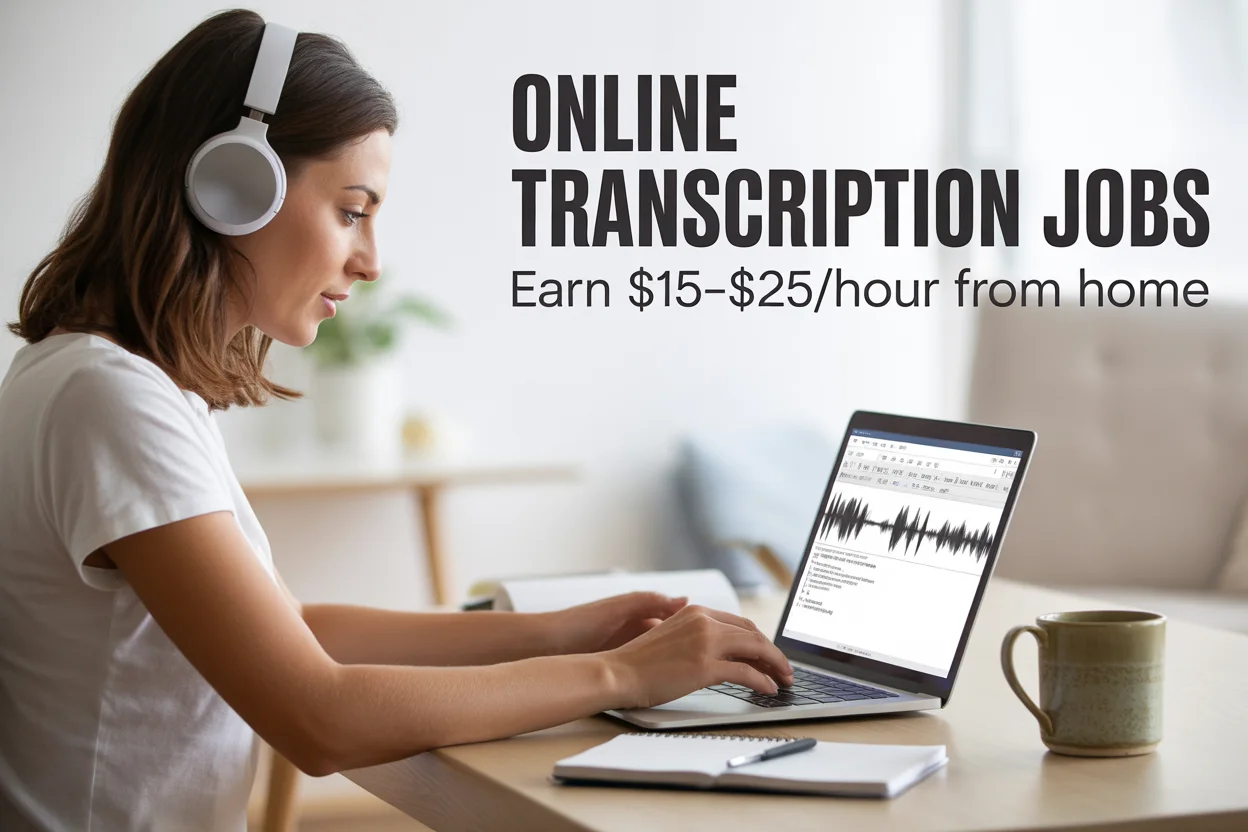
I remember the first time I realized I could get paid just for listening and typing—it felt almost too simple. No fancy degree, no complicated setup. Just headphones, a keyboard, and a bit of patience. That’s the appeal of online transcription jobs. You’re turning something you already do—listening—into income.
Now, I’ll be honest with you. Most “work from home” advice floating around online feels… sketchy. Vague promises, zero details, and way too many red flags. Transcription, though? It’s one of the few options that’s actually legit and accessible. I’ve tried it myself, and I know people who’ve turned it into a steady side income.
In this guide, I’m breaking down exactly what Online Transcription Jobs work looks like, what you can realistically earn, where to find real jobs, and how to land your first gig—even if you’re starting from scratch. And if you’re exploring multiple options, transcription sits right alongside virtual assistant jobs that pay well as one of the more practical ways to earn from home.
What Is Online Transcription Work, Exactly?
At its core, transcription is straightforward—you listen to audio or video and type out what’s being said. That’s it. No hidden complexity. But the execution? That’s where things get interesting.
You’ll come across three main types of transcription work:
- General transcription: Interviews, podcasts, YouTube videos—this is where most beginners start (and where I started too).
- Medical transcription: Requires training because you’re dealing with medical terminology.
- Legal transcription: Court recordings, depositions—again, more specialized.
For now, focus on general transcription. It’s the easiest entry point, and honestly, it’s more than enough to get your foot in the door.
How Much Can You Actually Earn?
This is where most people get it wrong. You’ll see headlines promising crazy hourly rates—but let’s keep it real.
Beginner Pay ($10–$15/hour)
When you’re just starting out, you’re usually paid per audio minute. Think $0.30 to $0.65 per minute.
Here’s the catch—one audio minute doesn’t equal one work minute. It usually takes 4–6 minutes to transcribe a single minute of audio. So if you’re earning $0.50 per audio minute, that works out to around $5–$7.50 per hour at first.
I know, that sounds low. But give it a week or two. Your speed improves faster than you’d expect. Before long, you’re hitting $10–$15/hour without even realizing it.
Experienced Pay ($20–$25+/hour)
Once you get comfortable—faster typing, better listening—you start earning more. It’s not magic. It’s just efficiency.
Some transcriptionists move into specialized niches and earn $25–$40+ per hour. Others go freelance and set their own rates (this is where things get interesting).
I’ve personally seen people double their income just by switching from platforms to direct clients.
Skills You Actually Need (It’s Not Just Typing Fast)
Typing fast helps—but it’s not the whole story. I learned that the hard way after struggling through my first messy audio file.
- Typing speed: Aim for 60+ WPM. You can start with 40, but faster is better.
- Listening skills: Accents, background noise, overlapping voices—it’s all part of the job.
- Grammar and punctuation: You’re creating a clean document, not dumping raw text.
- Research skills: You’ll pause and Google things more often than you think.
- Attention to detail: One missed word can change meaning.
And here’s something nobody tells you—it can get repetitive. If you’re not okay with that, transcription might test your patience.
Best Platforms to Find Online Transcription Jobs
This is where you actually start making money. Not all platforms are equal, though—I’ve tried a few, and the differences are noticeable.
Beginner-Friendly Platforms
- Rev: Probably the most popular starting point. Weekly payouts, no experience needed. Rates are competitive for beginners.
- TranscribeMe: Short clips, which makes it less overwhelming when you’re new. Low payout threshold.
- GoTranscript: Offers training and consistent work. Pays weekly.
If you’re unsure where to begin, pick two of these and apply. Don’t overthink it.
Higher-Paying Platforms (Require Experience or Testing)
- 3Play Media: Higher pay, but stricter quality standards.
- Scribie: Flexible workflow, paid per audio minute.
If you want a broader comparison, both Upwork’s guide to top transcription jobs and Indeed’s breakdown of online transcription job options give a good overview of what’s out there.
Freelance Route (Upwork, Fiverr, Direct Clients)
This is where things shift from “side hustle” to something more serious.
Instead of relying on platforms, you offer transcription services directly. You set your own rates. You choose your clients.
I remember my first freelance order—it paid more than three platform jobs combined. That’s when it clicked.
If you’re going this route, learning how to set up your first gig on Fiverr can make a big difference.
Equipment and Tools You’ll Need
You don’t need a fancy setup—but a few tools will make your life way easier.
- Computer: Any decent laptop or desktop works.
- Headphones: Go for something comfortable and noise-isolating. Even budget options work fine.
- Foot pedal: Optional, but helpful for controlling audio playback without using your hands.
- Software: Express Scribe or oTranscribe (both free).
- Internet connection: Stable enough to stream audio without interruptions.
I started with just a laptop and basic headphones. You can upgrade later—don’t let gear slow you down.
How to Get Your First Transcription Job (Step-by-Step)
Starting can feel confusing—so here’s the exact process I followed.
- Test your typing speed: Use a free online typing test.
- Practice: Grab a YouTube video and transcribe it in Google Docs.
- Sign up: Apply to platforms like Rev, TranscribeMe, and GoTranscript.
- Pass the test: Read the style guide carefully—this is where most people fail.
- Start small: Take short, easy files first. Focus on accuracy.
Don’t rush. Speed comes naturally once accuracy is solid.
Common Mistakes That Get Beginners Rejected
I made at least two of these early on—so learn from my mistakes.
- Poor grammar and punctuation during tests.
- Ignoring the platform’s style guide.
- Skipping unclear words instead of marking them properly.
- Submitting work without proofreading.
Most rejections aren’t about skill—they’re about carelessness.
Is Online Transcription Right for You?
Let’s be real—this isn’t for everyone.
It works well if you enjoy quiet, focused work. If you like the idea of flexible hours and working solo, you’ll probably enjoy it.
But if you need fast income or get bored easily? It might frustrate you.
I found it surprisingly calming—just me, my headphones, and a steady rhythm of work. But I know people who couldn’t stand the repetition.
If you’re someone who prefers low-interaction work, you might also want to explore other side hustles built for introverts.
FAQs
Do I need experience to start online transcription?
No, most beginner platforms don’t require experience. You’ll need to pass a basic test, but with a bit of practice and attention to detail, you can get started pretty quickly.
How fast do I need to type for transcription jobs?
A typing speed of around 60 WPM is ideal. That said, you can begin with 40 WPM and improve as you go—your speed naturally increases once you start working on real files.
Can I do transcription on my phone?
Technically yes, but it’s not practical. Transcription requires constant pausing, rewinding, and formatting, which is much easier on a computer.
How much do transcription jobs pay per hour?
Beginners usually earn around $10–$15 per hour after gaining some speed. With experience, many transcriptionists reach $20–$25+ per hour, especially if they move into freelance or specialized work.
Is AI replacing transcription jobs?
Not entirely. AI can handle simple audio, but human transcriptionists are still needed for accuracy, formatting, and difficult recordings. In many cases, people now edit AI-generated transcripts instead of starting from scratch.