

Let’s get the awkward question out of the way first. Can you actually make $200 a day on Turo, or is that just bait on a YouTube thumbnail? The honest answer is yes, but only if a few specific things are true: the right car, the right city, the right protection plan, and a calendar that stays booked. We’ve run the numbers ourselves, talked to active hosts, and pulled back the curtain on what daily income on Turo really looks like in 2026.
This guide walks you through it like a friend would, no fluff. By the end, you’ll know exactly what kind of car to list, what to charge, how to handle taxes, and whether one car or a small fleet makes more sense for your situation. If you want the broader picture first, here’s our full Turo car sharing review for context.

Is $200 a Day on Turo Actually Realistic?
Short answer: yes, with caveats. Hitting $200 a day on Turo is not a 365-day-a-year guarantee. It’s a target you average across booked days. Some weekends your car earns $300+. Some Tuesdays it earns nothing. The hosts who consistently average $200/day across a full month usually share four traits.
They list a car people actually want. They live in or near a high-demand metro. They keep their calendar at 70% utilization or higher. And they price dynamically instead of setting one rate and walking away.
If even one of those four breaks, the math falls apart fast. We’ll fix all four in this guide.
How Much Do Turo Hosts Make? The Real Numbers
Turo’s own Carculator and host data suggest active single-car hosts in major US metros typically clear $500 to $1,200 in net monthly profit per vehicle. The hosts who push past that and hit a true $200/day average usually run multiple cars or operate in airport-adjacent markets like Los Angeles, Miami, Phoenix, or Denver.
Here’s a clean way to think about it. Gross daily rate is what the renter pays. Net daily rate is what hits your bank after Turo’s commission, your protection plan fee, gas reimbursement adjustments, and cleaning prep. The gap between the two is where most beginners get burned.

The $200/Day Turo Math Sheet
Screenshot this. It’s the framework none of the top-ranking articles spell out clearly.
| Car Class | Target Daily Rate | Days Booked/Month to Average $200/Day | Realistic Net (after 25% Turo cut + protection) |
|---|---|---|---|
| Economy (Civic, Corolla) | $55 to $75 | 28+ | Tight, often misses target |
| Mid-size SUV (RAV4, CR-V) | $85 to $110 | 22 to 25 | Hits target in busy metros |
| Luxury sedan (Tesla Model 3, BMW 3) | $130 to $180 | 15 to 20 | Hits target with moderate utilization |
| Luxury SUV / Convertible | $180 to $280 | 10 to 14 | Easiest to hit, highest risk |
| Specialty / exotic | $300 to $700+ | 6 to 10 | Hits with low utilization, big insurance cost |
Notice the pattern. Cheaper cars need to be booked nearly every day to hit $200/day average. Pricier cars hit the target with far fewer booked days but carry higher risk and higher protection costs. Most successful first-time hosts land in the mid-size SUV or luxury sedan tier. That’s the sweet spot.
Step 1: Pick the Right Car for Your Market
This is where 80% of first-time hosts mess up. They list whatever car they already own, hope for the best, and then complain about the platform when it doesn’t work.
The right Turo car is the one your specific city wants to rent. In Miami, that’s convertibles and luxury SUVs. In Austin, it’s pickup trucks. In San Francisco, it’s Teslas and EVs. In Denver, it’s all-wheel-drive crossovers in winter and Jeeps in summer.
How to figure out your local demand:
- Search Turo as a renter in your zip code for the next three weekends.
- Note which cars show up “Booked” or “Limited availability.”
- Note the average daily rates for the cars that ARE available.
- Cross-reference what’s selling at your local used dealer in the $15K to $30K range.
The intersection of “high Turo demand” and “affordable to buy used” is your target car. If you already own a car that fits, you’re ahead of the game. If you don’t, this matters more than any other decision you’ll make.

Step 2: Choose Your Protection Plan Honestly
Turo offers tiered protection plans for hosts (60, 75, 80, 85, 90 in various combinations of revenue share and coverage). The lower the number Turo keeps, the less protection you get. The higher the number, the more they take but the more they cover.
Here’s the honest breakdown most articles dance around:
- 80/85/90 plans: You keep more money per booking but you carry more financial risk if something goes wrong. Suitable for hosts with separate commercial insurance or deep cash reserves.
- 75 plan: Middle ground. Most active hosts we know start here.
- 60 plan: Maximum coverage, smallest cut to you. Great for first-timers who want to sleep at night.
For Turo’s official rundown, their host listing page lays out current plan terms. Verify before you list because plans change.
A first-time host running their personal car should almost always start on the 60 or 75 plan. The extra 10 to 15 percentage points you’d keep on the 80+ plans evaporates fast the first time someone returns your car with a curb-rashed wheel.
Step 3: Price Like a Pro, Not a Hopeful Beginner
Static pricing is the silent killer of Turo income. If you set your daily rate once and never touch it, you’re either leaving money on the table during high-demand weekends or sitting empty during slow weeks.
Three pricing tactics that actually move the needle:
Use Turo’s automatic pricing as a baseline, not a final answer. Their algorithm is decent for new hosts but it lags behind real-time demand spikes. Once you’ve got 5+ trips under your belt, switch to custom pricing.
Ladder your rates by day of week. Friday and Saturday should always cost 20 to 40% more than Tuesday and Wednesday. Renters expect it.
Spike for events. Concerts, sports playoffs, conferences, holiday weekends. Set calendar alerts the moment major events get announced and bump your rates 50 to 100% for those dates. This single tactic adds $200 to $600 a month for hosts who do it consistently.

Step 4: Build a Listing That Actually Books
Most beginner listings look like Craigslist ads from 2009. Yours shouldn’t. The listings that hit 70%+ utilization share a few traits.
A clean cover photo shot in daylight with the car at a 3/4 angle. No driveway clutter, no bad lighting, no garage shadows. Eight to twelve total photos covering exterior, interior, dashboard, trunk, and any premium features (CarPlay, sunroof, all-wheel drive). A description that reads like a friendly note, not a legal contract. House rules that are firm but not aggressive (no smoking, return at the same fuel level, pets only with prior approval).
One thing competitors miss: include a short “what makes this car great for [your city]” line. “Perfect AWD for ski trips up I-70” beats “nice SUV, good gas mileage” every single time.
Step 5: Master Turnaround Time
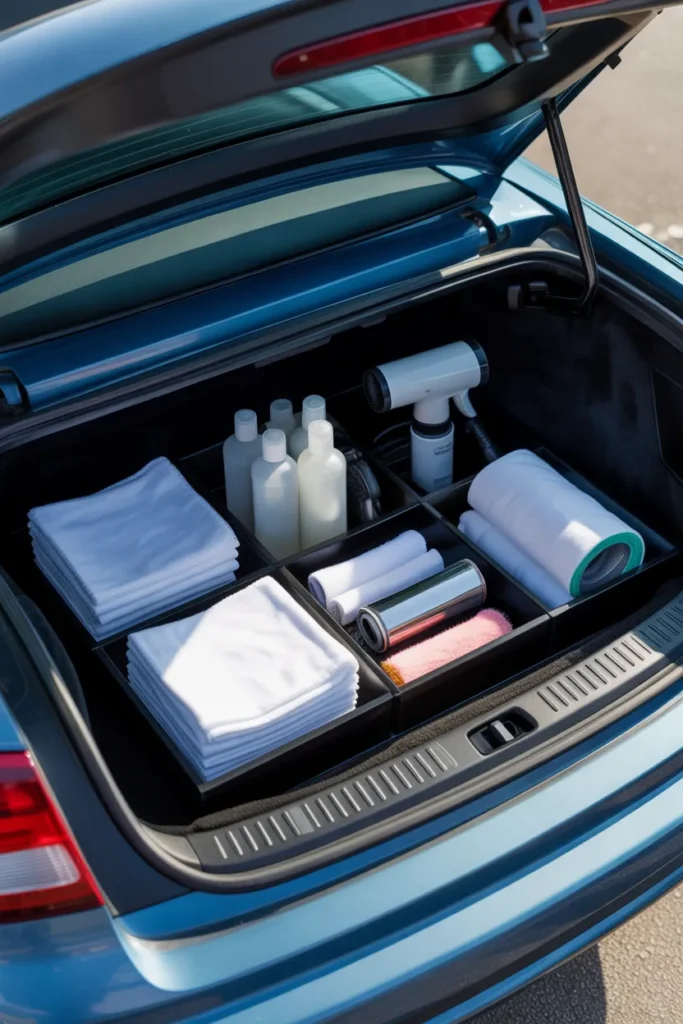
Every minute between trips is money you’re not making. The hosts who hit $200/day averages have turnaround dialed in. They block 90 minutes between trips for cleaning and inspection. They pre-stock a “trip kit” in the trunk (cleaning wipes, paper towels, glass cleaner, lint roller, phone charger). They take time-stamped photos at every handoff.
If you live more than 20 minutes from your car’s parking spot or you work full-time, consider a co-host or a local detailer who handles turnarounds for $25 to $40 per trip. The trade-off is worth it once you’re booking 15+ trips a month.
One Car or a Small Fleet? The Decision Tree
Here’s the question Reddit threads argue about endlessly. Should you start with one car or jump straight to three?
Start with one car if any of these apply:
- This is your first hosting experience anywhere (Airbnb, Turo, anything).
- You have less than $10,000 in cash reserves outside the car purchase.
- Your day job leaves you fewer than 8 hours a week for hustle admin.
- You’re testing whether your local market even works.
Move to a small fleet (2 to 4 cars) once you’ve hit ALL of these:
- One car has been booked 65%+ for three consecutive months.
- You have a reliable cleaning and turnaround system in place.
- You’ve filed at least one tax return as a self-employed Turo host.
- You have $20,000+ in reserves to cover a worst-case repair or insurance gap.
Skipping the one-car phase to chase $1,000+/day fleet income is the single most expensive mistake first-timers make. We’ve seen it crash careers more than once. If you’re curious about other approaches that don’t require a vehicle purchase, look at the best ways to rent out your car or truck and the broader category of renting out your stuff for extra income.

Geographic Arbitrage: Where Turo Pays the Most
This is the angle nobody else covers. Your city matters more than your car.
The top US metros for Turo host income in 2026 (based on demand patterns and average daily rates):
- Los Angeles, CA — entertainment + tourism + airport demand year-round.
- Miami, FL — convertibles and luxury SUVs print money during peak season.
- Phoenix, AZ — spring training, golf season, snowbird traffic.
- Denver, CO — ski season AWD demand spikes daily rates 60%+.
- Orlando, FL — theme park tourism keeps utilization sky-high.
- Las Vegas, NV — events and conferences drive nightly rates.
- Nashville, TN — bachelorette and concert tourism is a real segment.
- Austin, TX — SXSW, F1 weekend, and tech conference spikes.
If you live within 45 minutes of any of these airports, you have a structural advantage. If you don’t, you can still make Turo work, but expect closer to $80 to $130/day averages instead of $200+.

Turo Taxes: What You Actually Owe
Turo income is self-employment income. The IRS treats you as a business owner. That means quarterly estimated taxes if you expect to owe more than $1,000, and Schedule C reporting on your annual return.
The good news: deductions are real and significant.
- Vehicle depreciation
- Loan interest (business-use percentage)
- Insurance premiums
- Cleaning and maintenance
- Mileage to and from handoffs
- Phone and internet (business-use percentage)
- Turo platform fees
Set aside 25 to 30% of every dollar of net profit in a separate account. Pay quarterly. The IRS publishes self-employment guidance at irs.gov that covers Schedule C basics. This is general info, not tax advice, so loop in a US-licensed CPA before your first filing if you cross $5,000 in gross Turo revenue.

What is the $100 Charge on Turo?
Renters often see a $100 to $300 incidental hold on their card when they book. This is not income for you. It’s a refundable security deposit that Turo holds and releases after the trip ends cleanly. Hosts don’t see this money unless damage is filed, so don’t budget around it.
The Real Risks Nobody Posts About
Time for the part the cheerleader articles skip. Turo hosting carries real downside.
Cars come back damaged. Renters smoke in non-smoking vehicles. Mileage gets exceeded and reimbursement disputes drag on. Insurance claims get denied if you’re caught using a personal auto policy on a Turo car (you need commercial or rideshare-friendly coverage). Cars get totaled in single-vehicle accidents and Turo’s protection sometimes pays less than what you owe on the loan.
The hosts who survive long-term plan for these. They keep cash reserves. They photograph every handoff. They never list a car they couldn’t afford to lose.

A Realistic 30-Day Path to Your First $200 Day
Week 1: Research your local market, pick your car, open your Turo host account, complete vehicle inspection requirements.
Week 2: Take professional-quality photos, write your listing copy, set baseline pricing using Turo’s tools, choose your protection plan.
Week 3: Go live, accept your first 2 to 3 trips at slightly below-market rates to build reviews fast, nail every handoff with time-stamped photos.
Week 4: Adjust pricing based on early demand signals, raise weekend rates, set event-based price spikes for the next 90 days, request reviews from happy renters.
By day 30, most hosts in solid metros are booking weekends consistently. By day 60, the $200/day average becomes a real possibility on busy weekends. By day 90, you’ll know whether to scale up or stay solo.

FAQ: Quick Answers to Common Turo Questions
1. Is making $200 a day on Turo actually realistic for a first-time host?
Yes, but it’s a monthly average across booked days, not a daily guarantee. First-time hosts in strong metros with the right vehicle typically hit it within 60 to 90 days of consistent operation.
2. What is the $100 charge on Turo?
It’s a refundable incidental hold placed on the renter’s card at booking. Hosts don’t receive this money unless damage is filed. Plan around your daily rate, not the deposit.
3. Which cars make the most money on Turo?
Mid-size SUVs and luxury sedans (Teslas, Audis, BMWs) consistently produce the best ratio of revenue to risk. Exotics earn more per day but require commercial insurance and deep reserves.
4. What are the real risks of hosting on Turo?
Damage, smoking violations, insurance gaps, totaled vehicles, and protection plan denials are the main ones. Mitigate with cash reserves, time-stamped handoff photos, and a plan you actually understand.
5. How does Turo compare to traditional rental car companies?
Turo gives you higher per-trip margin but you carry the operational load (cleaning, handoffs, repairs). Traditional rental companies have scale and insurance leverage you don’t. Turo wins for hosts who treat it like a real business.
6. Can you make $100 a day on Turo with just one car?
Yes, this is much more realistic for first-timers than $200/day. A well-listed mid-size SUV in any decent US metro can clear $100/day average within the first 60 days.
7. How much do Turo hosts actually make per month?
Single-car hosts in major metros typically clear $500 to $1,200 in net monthly profit. Top performers running optimized listings or small fleets clear $2,000 to $6,000+. Anything beyond that usually involves 5+ vehicles or specialty cars in airport markets.
Final Take
$200 a day on Turo is real, but it’s earned, not handed out. The hosts who hit it picked the right car, run their pricing actively, and treat handoffs like a small business operation. If you live in a strong metro, own or can buy a car your city actually wants to rent, and have the cash reserves to weather the first bumpy month, this hustle works.
What kind of car are you thinking about listing? That single decision shapes everything else.