
Let me save you a weekend of doom-scrolling Etsy bestseller lists. Most of the “top printable ideas” articles you’ll find are just recycled lists from 2022, padded out with generic categories like “wall art” and “planners.” That’s not a strategy. That’s a coin flip.
So I went the other way. I spent the last few weeks studying real Etsy shops, pulling fee math, and stress-testing every niche against what’s actually selling in 2026. The Etsy printables landscape has changed more in the last 18 months than in the previous five years combined, and the shops winning right now look nothing like the ones that were winning in 2023.
Here’s what you’ll get in this guide: the printable niches that are quietly printing money in 2026, the ones that are oversaturated and dying, a free 3-filter validation test you can run in 10 minutes, and the real fee and tax math nobody else seems willing to write down. By the end, you’ll know exactly what to design first, what to skip, and how to price it so you actually keep some of the money.

Why Etsy Printables Are Still a Real Side Hustle in 2026
Quick reality check before we get into niches. Etsy buyers haven’t gone anywhere. The platform still pulls hundreds of millions of monthly visitors, and the digital downloads category has actually grown its share of total sales since 2023. People want printable wedding signs, budget trackers, classroom labels, and home organization charts at 11pm on a Tuesday. Etsy is where they look first.
What’s changed is the noise. AI tools have made it laughably easy to spit out 200 generic Canva templates in a weekend, which means buyers have gotten ruthless about quality. Generic stuff doesn’t sell anymore. Specific stuff does.
That’s actually good news if you’re willing to niche down. A new shop with 30 truly useful printables in a tight niche will outperform an old shop with 300 mediocre ones. I’ve watched it happen too many times to call it a coincidence.
The startup math still works in your favor. Per [Appendix A of our side hustle directory], Etsy digital downloads run $0 to $50 to start and a part-time monthly ceiling of roughly $500 to $3,500. Some shops obviously crush that ceiling, but treat it as the realistic median for someone working 10 to 15 hours a week.
The 2026 Etsy Fee Stack (Read This Before You Price Anything)
Most printable guides skip this part, which is exactly why so many sellers end up technically profitable but practically broke. Here’s what Etsy actually keeps in 2026:
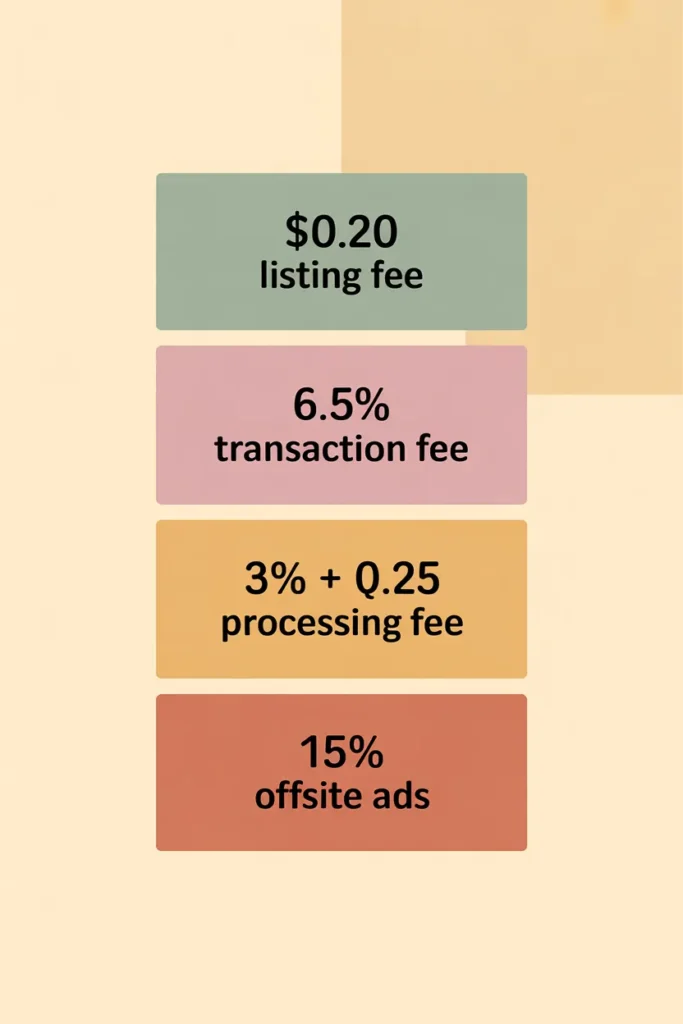
- Listing fee: $0.20 per listing, renewed every 4 months or after each sale
- Transaction fee: 6.5% of the total sale price (item + shipping if you charge it)
- Payment processing: 3% + $0.25 per transaction for US sellers
- Offsite Ads: 15% on attributed sales for shops under $10K annual revenue (optional), 12% for shops over $10K (mandatory)
On a $10 printable with no ads, Etsy keeps about $1.30, leaving you roughly $8.70. On a $30 bundle, you keep about $26.55. Once Offsite Ads kick in, your effective take drops by another 12 to 15 percent on those specific orders. Per the Etsy Seller Handbook, these fees are baked into the standard Etsy Payments flow and there’s no opting out of the core three.
What does this mean for niche selection? Avoid building a shop around $3 printables. The math doesn’t survive Etsy’s flat fees. Aim for a $9 to $35 average price point through smart bundling. We’ll come back to this.
How to Pick a Niche That Actually Sells (The 3-Filter Test)
Before I show you specific niches, let me hand you the framework I use to vet every new printable category. Skip this step and you’ll waste months designing things nobody wants.
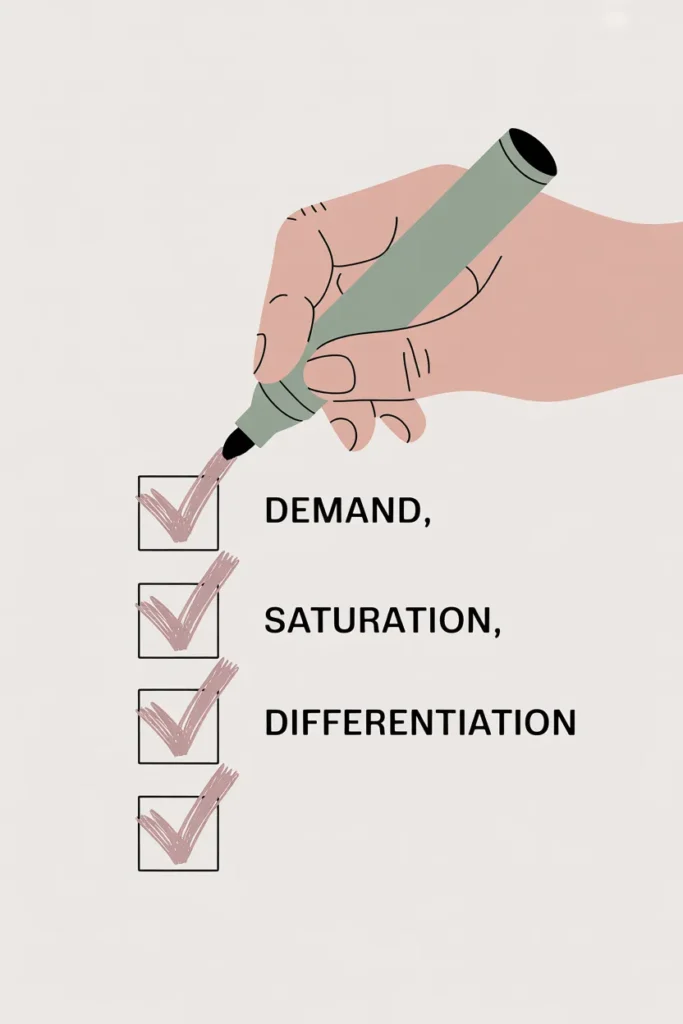
Filter 1: Demand. Search the niche phrase on Etsy itself. Not Google. Etsy’s search bar is the closest thing you’ll get to free buyer intent data. Look for autocomplete suggestions and the “best seller” tag count on the first results page. If you see fewer than 5 best sellers in your niche, demand is too thin. If you see 50+, you’ve found a real market.
Filter 2: Saturation. Count the total listings under your search. Under 1,000: probably too small unless it’s a clear emerging trend. 1,000 to 50,000: the sweet spot for new shops. Over 100,000: the niche is mature, you’ll need a strong angle to break through.
Filter 3: Differentiation. Look at the top 10 listings. Can you describe in one sentence what makes them different from each other? If they all blur together, that’s your opening. If they each have a distinct vibe, you need to bring something genuinely new to compete.
If a niche passes all three filters, design it. If it fails any one, skip it and run the test on the next idea. I keep a running spreadsheet with this scoring system, and I won’t open Canva until a niche scores 3 for 3.
Etsy Printables Niches That Sell in 2026 (Real Examples)
These are the categories I’ve watched perform consistently through Q1 and Q2 of 2026. I’ve grouped them by buyer type because that’s how shoppers actually search.
1. Wedding and Event Printables (Still the Heavyweight Champion)
Wedding printables remain one of the highest-converting digital download categories on Etsy, and the saturation isn’t as scary as it looks because brides are extremely specific about aesthetics. Trending sub-niches: minimalist boho welcome signs, modern wedding seating charts, bachelorette scavenger hunts (this niche alone has launched dozens of $5K+ months for solo sellers), bilingual wedding invitations, and editable Corjl templates that buyers can personalize themselves without you lifting a finger.
Price range that holds: $8 to $35 per item, $35 to $75 for full template suites.
Why it works in 2026: Editable templates have outpaced static PDFs. Buyers want to type in their own names and dates. Tools like Corjl and Canva templates ship with built-in personalization that makes the buyer feel like they bought a custom service, not a download.
2. Budget and Finance Printables (Quiet Cash Cow)
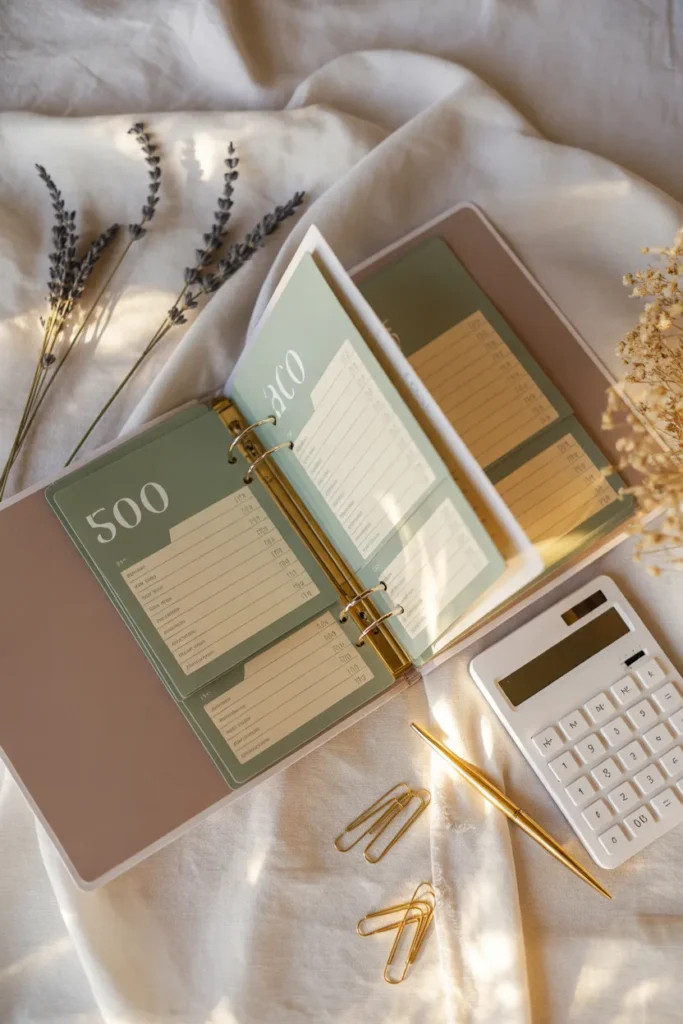
This is where I’d start a new shop today if I had to pick one. Personal finance printables, especially for the cash-stuffing community and Dave Ramsey-adjacent crowd, have been climbing all year. Specific bestsellers right now: cash envelope inserts (A6 size for the popular budget binders), no-spend challenge trackers, sinking fund printables, debt snowball worksheets, and quarterly tax estimator sheets for self-employed folks.
Price range: $4 to $15 individually, $20 to $45 for bundled binder sets.
The angle most sellers miss: Sell the binder system, not the worksheet. A complete cash envelope binder package with 30+ inserts at $35 outsells a single $5 envelope template by a factor of 6 to 1, and the design work is mostly the same.
3. Teacher and Classroom Printables
Educators spend their own money on classroom resources. Always have, always will. The teachers-pay-teachers crowd has been steadily migrating to Etsy for higher-quality digital products. What’s selling: classroom decor bundles, behavior charts, curriculum calendar trackers, sub plans templates, IEP organizers, Boom Card-style interactive lessons, and end-of-year award certificates.
Price range: $4 to $20 individually, $25 to $80 for full classroom bundles.
Validation tip: Search “teacher printable [your subject area]” on Etsy. If the bestseller tags are stacked 10+ deep on the first page, you’ve found a live market.
4. Home Organization and Cleaning Printables
The Marie Kondo and “Clean Tok” momentum hasn’t faded, it just got more practical. Selling well in 2026: zone-based cleaning schedules, family chore charts with rotating assignments, freezer meal inventory sheets, pantry labels (especially handwritten-style for spice jars), home maintenance trackers, and printable address labels for moving.
Price range: $3 to $12 individually, $18 to $40 for full home management bundles.
The pantry label niche is a quiet goldmine. A clean monochrome label set with 100+ designs sells for $8 to $15 and converts at a higher rate than most categories I’ve tracked.
5. Wellness, Habit, and Mental Health Printables
A massive shift here in 2026: buyers want clinical-feeling tools, not cute ones. Therapist-style worksheets, CBT thought logs, sleep trackers, mood journals, gratitude prompts that don’t sound like Pinterest poetry. The vibe is “my therapist would print this,” not “rainbow positivity.”
Specific winners: 90-day habit trackers, undated wellness planners (so they don’t expire), perimenopause symptom logs (huge underserved niche right now), ADHD-friendly daily planners with single-page formats, and meal-and-mood correlation journals.
Price range: $5 to $18 individually, $25 to $60 for bundled wellness systems.

6. Small Business and Side Hustle Printables
Other entrepreneurs are now one of the most reliable buyer segments on Etsy, partly because they understand digital product value and partly because they treat it as a business expense. What’s selling: Etsy listing description templates, social media content calendars, client onboarding packets, invoice templates, contract templates (with a “consult an attorney” disclaimer baked in), and ChatGPT prompt libraries for specific industries.
Price range: $7 to $35 individually, $40 to $150 for “starter kit” bundles.
The prompt library angle is brand new and very hot. A focused 100-prompt pack for, say, real estate agents or wedding photographers can sell for $25+ with almost zero saturation.
7. Kids, Activities, and Homeschool Printables
Worksheets aren’t dead, they just got specific. Trending: dyslexia-friendly handwriting practice, screen-free road trip activity packs, allergy-friendly birthday party invitations, themed scavenger hunts (forest, beach, museum), and Montessori-aligned toddler routines.
Price range: $4 to $15 individually, $20 to $50 for activity bundles.
Parents will pay $8 for a printable that buys them 90 minutes of quiet on a road trip. That value calculation is wildly in your favor.
8. Seasonal and Holiday Printables
The dirty secret of Etsy: seasonal printables have predictable yearly revenue spikes. A Halloween costume contest printable that does well in October will reliably do well next October. You build the asset once and it pays you for years.
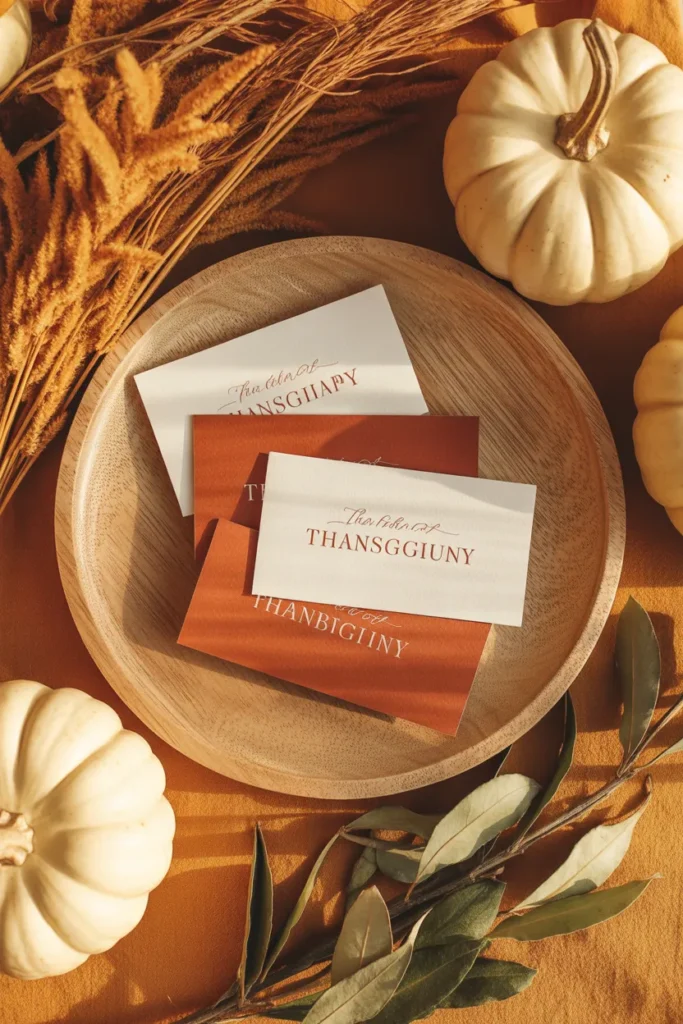
What’s reliable: Christmas gift tags (especially minimalist and watercolor styles), Easter scavenger hunts, Mother’s Day and Father’s Day printable cards, July 4th party games, Thanksgiving place cards, and Hanukkah and Diwali designs (chronically underserved on Etsy).
Price range: $3 to $12 individually, $15 to $40 for holiday bundles.
US-specific note: list seasonal items 60 to 90 days before the holiday. Etsy’s algorithm needs runway to start ranking your listing before peak buying.
9. Wall Art Printables (Saturated, But Still Winnable)
I almost left this category out because it’s so flooded. But there are still real opportunities if you niche hard. Avoid: generic typography, abstract shapes, anything that looks AI-generated. Lean into: very specific aesthetic micro-niches like cottagecore botanical illustrations, retro 70s mushroom prints, dark academia book quotes, vintage map series, and specific geographic prints (state outlines, city skylines, national parks).
Price range: $4 to $15 single prints, $20 to $50 for sets.
Reality check: This is the toughest category to break into right now. If wall art is your only idea, run the 3-filter test religiously before committing.
10. Digital Stickers and Goodnotes Templates
A relatively new and still under-saturated category. Digital planner users on iPads buy these in bulk. Selling well: Goodnotes weekly templates, digital sticker books (especially seasonal sets), Notability-compatible study templates, and hyperlinked digital planners with multi-year date ranges.
Price range: $5 to $25 individually, $30 to $90 for full digital planner kits.
This category compounds. Buyers who like your sticker style come back monthly for new packs.
What I’d Skip in 2026
Some categories that worked great two years ago are now cemeteries:
- Generic motivational quote prints. AI flooded this niche. Margins are gone.
- Basic black-and-white minimalist line art faces. Same problem.
- Single-page generic budget worksheets without a system. Replaced by full binder bundles.
- Standard wedding invitations without editable templates. Buyers expect Corjl now.
- Resume templates without industry specificity. Generic ones don’t rank anymore.
If your gut wants to design any of these, run the 3-filter test first and probably move on.
How to Price Etsy Printables So You Actually Profit
A pricing framework I borrow from a directory I keep handy:
| Tier | What It Solves | Price Range |
|---|---|---|
| Tip jar | A single small annoyance | $3 to $8 |
| Tool | A specific recurring task | $9 to $19 |
| Solution | A defined outcome | $20 to $49 |
| Transformation | A measurable life change | $50 to $150+ |
Single printables belong in tip jar or tool. Bundles belong in solution. Multi-product systems with bonus content belong in transformation. The most common pricing mistake I see: selling solution-tier value at tip-jar prices. A 50-page wedding planning printable at $7 isn’t generous, it’s leaving $30 on the table on every sale.
For a deeper breakdown of which specific printables hit each price tier, our best selling printables on Etsy guide maps out the exact bundles that move at each level.
Tax and Legal Reality for US Etsy Sellers
This is where most printable guides go silent. Here’s the short version, with the standard disclaimer that I’m not a CPA and you should talk to one before making decisions that affect your taxes.
If your Etsy printable income exceeds $400 in a calendar year, the IRS expects you to report it as self-employment income, even if it’s a side hustle. The hobby vs. business distinction matters because hobby income doesn’t allow you to deduct expenses against it, while a legitimate business does. The IRS publishes guidance on the hobby vs. business distinction that’s worth reading once before you cross the $400 threshold.
A few practical moves for new sellers:
- Open a separate checking account before your shop starts moving money. Commingled funds turn a 30-minute year-end task into a 30-hour one.
- Set aside roughly 25 to 30 percent of net profit for federal and state taxes. Higher in high-tax states.
- If you cross roughly $10K in net profit, talk to a CPA about whether an LLC makes sense for liability protection.
- Track every business expense (Canva subscription, eRank, mockup software, even your home office square footage). They reduce taxable income.
This isn’t sexy, but it’s the difference between a side hustle that actually nets you money and one that quietly costs you at tax time.
Driving Pinterest Traffic to Your Etsy Shop
Etsy’s internal search will only get you so far. The shops scaling past $2K a month almost always have a Pinterest funnel feeding them. Pinterest is where buyers go to plan, and printables are inherently Pinterest-friendly.
The basics that actually work in 2026: 5 fresh pins per new listing, vertical 2:3 ratio, text overlay that names the product clearly, and a consistent posting cadence over a 90-day window before you judge whether it’s working. If you want the deeper playbook, our Pinterest SEO tips guide walks through keyword research, board structure, and the exact pin format that’s been ranking this year.

How to Build a 30-Listing Shop in 30 Days (Without Burning Out)
Most new sellers either freeze (zero listings after 3 months) or sprint and quit (200 listings, then nothing). Neither works.
The cadence I recommend:
- Week 1: Run the 3-filter test on 5 niches. Pick one. Design 5 listings.
- Week 2: Design 8 more listings inside that niche. Bundle 3 of them as a package.
- Week 3: Design 10 more, including 2 seasonal and 1 free lead magnet.
- Week 4: Design final 5 listings, set up Pinterest with 5 pins per listing.
That’s 30 useful listings in a tight niche, plus a lead magnet for email capture and roughly 150 Pinterest pins seeded. It’s enough to start ranking inside Etsy and on Pinterest simultaneously. Burnout is almost always a signal that you’re working without a niche, which means every listing requires fresh thinking. With a niche, listings start to compound on each other.
For the full step-by-step on launching the shop itself (banner, policies, listing photos, SEO), our companion how to sell printables on Etsy guide covers the setup side in detail.
Frequently Asked Questions
What are the best digital products to sell in 2026?
The categories with the strongest 2026 momentum are budget and cash-stuffing printables, editable wedding and event templates (especially Corjl-based), teacher and classroom resources, wellness and mental health worksheets, small business templates including AI prompt libraries, and seasonal printables that you can rerun every year. Avoid generic motivational prints and basic resume templates.
What’s trending on Etsy in 2026?
Buyers in 2026 want specificity over generic aesthetics. Trending: editable templates that buyers can personalize themselves, A6 budget binder inserts, AI prompt packs for specific professions, perimenopause and women’s health trackers, ADHD-friendly single-page planners, and underserved cultural and religious holiday printables (Diwali, Hanukkah, Lunar New Year).
What printables are in demand on Etsy?
Demand is highest in finance and budgeting (especially cash envelope systems), wedding and event templates with editable fields, teacher classroom bundles, wellness and habit trackers, and home organization systems. Bundle pricing in the $20 to $50 range is consistently outperforming single-item listings under $10.
Is it worth selling on Etsy in 2026?
Yes, with caveats. The platform still has the largest active buyer base for digital printables, and a focused new shop can realistically hit $500 to $3,500 per month part-time within 6 to 12 months. The caveats: Etsy’s fee stack now totals roughly 11 to 13 percent before optional ads, generic AI-generated content is being filtered hard, and the shops that win are niched down rather than trying to be everything to everyone.
How much does it cost to start an Etsy printables shop?
Plan for $0 to $50 in upfront costs. The minimums: $0.20 per listing (so $6 for 30 starter listings), and either a free Canva account or $13/month for Canva Pro if you want premium templates. Optional but useful: an eRank subscription at $5.99 to $9.99 per month for keyword research, and a Creative Market or Adobe Stock subscription if you want commercial-licensed assets.
How long until my first sale?
Most new shops see their first sale within 2 to 6 weeks if they list at least 20 items in a validated niche and start a Pinterest funnel from day one. Shops that sit at 3 to 5 listings often wait months. Etsy’s algorithm needs critical mass to start showing your shop in search.
Do I need an LLC to sell printables on Etsy?
Not legally required to start. Most beginners start as sole proprietors and form an LLC once they cross $10K to $20K in annual net profit. The IRS taxes the income either way, so the LLC question is mostly about liability protection and brand legitimacy. Talk to a CPA before deciding.

Where to Go From Here
Here’s the honest summary. Etsy printables in 2026 still work, but only if you treat the shop like a real business. Niche down. Validate before you design. Price for the actual fee stack. Build a Pinterest funnel from day one. Track your numbers like a grownup so taxes don’t blindside you.
The shops doing $3K, $5K, $10K a month right now didn’t get there by listing 200 random ideas and hoping. They picked a corner of the market, went deep, and bundled their work into solution-tier products that buyers were willing to pay $25 to $75 for. You can do the same thing.
Pick one niche from this list, run the 3-filter test today, and design 5 listings this week. That’s it. Don’t overthink the rest. Which niche feels closest to something you’d actually use yourself? Start there, because authenticity reads through the listing photos faster than any keyword ever will.