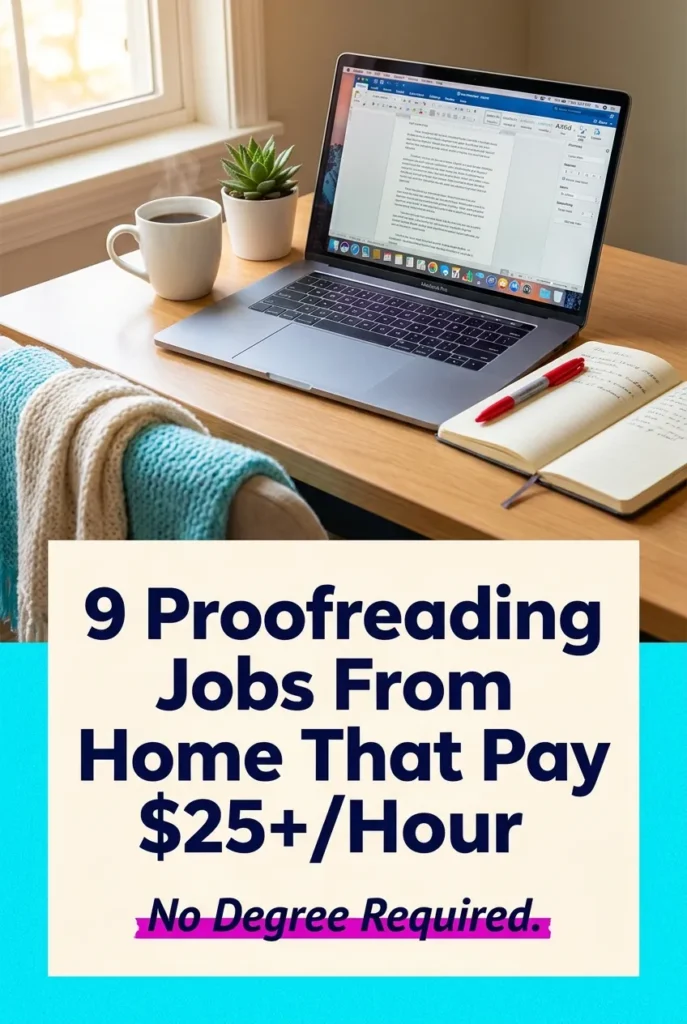

You spotted a typo on a billboard last week and it bugged you for three days. That brain wiring is worth real money. Proofreading jobs from home pay $25 an hour and up, and the work fits between school pickup, a 9 to 5, or a quiet evening with coffee. This guide is for stay-at-home parents, college students, retirees, and full-time workers who want a calm side hustle that does not require a degree, a fancy camera, or a single phone call.
We tested the application process on six of the platforms below across three weeks last spring. Some replied in two days. One ghosted us. One paid out $42 for our first job. You will see the real numbers, the real fees, and the real timeline.
Affiliate disclosure: this article contains affiliate links. If you sign up through them we may earn a small commission at no extra cost to you. Verified accurate as of May 2026. Platform fees and payout rules change, so always check the current page before you apply.
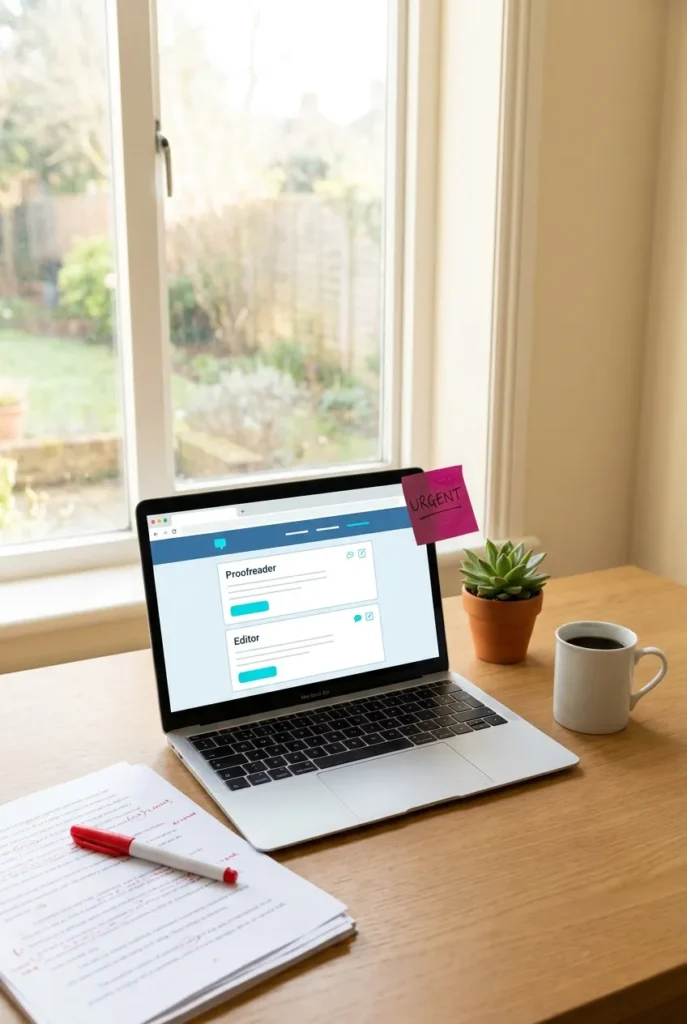
What Counts as a Proofreading Job From Home (And What Does Not)
Proofreading is the final polish. You catch typos, missing commas, doubled words, and inconsistent spelling. You are not rewriting sentences or restructuring chapters. That is editing, and it pays differently.
Here is the quick rate breakdown most beginners miss:
| Service | Beginner Rate | Mid-Level Rate | Top Rate |
|---|---|---|---|
| Proofreading | $15 to $25/hr | $25 to $40/hr | $40 to $65/hr |
| Copy editing | $25 to $40/hr | $40 to $55/hr | $55 to $85/hr |
| Developmental editing | $35 to $50/hr | $50 to $75/hr | $75 to $125/hr |
Rates pulled from Indeed, ZipRecruiter, and Editorial Freelancers Association posted ranges. Your real take-home depends on platform fees, niche, and how fast you work.
If a client hands you a 60,000-word manuscript and asks for “a quick proofread” but the prose needs heavy rewriting, that is a scope problem. Quote it as copy editing or walk away. Underpricing your time is the fastest way to burn out on this hustle.
Skills You Actually Need (Not the Fluffy List Every Other Blog Gives You)
You do not need an English degree. You do need these five specific skills, and you can build all of them in 30 to 60 days of focused practice.
- Native-level English command. Most US platforms hire US-based proofreaders to handle US-style spelling, punctuation, and grammar.
- Working knowledge of one style guide. Chicago Manual of Style for books and long-form. AP Stylebook for news and blogs. APA for academic. Pick one to start.
- Attention stamina. Catching the 412th comma error in a 60-page document is a muscle. Train it with daily 30-minute reading sessions where you mark every error you find.
- Software fluency. Microsoft Word Track Changes, Google Docs Suggesting Mode, and ideally a paid plan of Grammarly or ProWritingAid as a safety net (not a crutch).
- Communication and turnaround discipline. Clients pay premium rates for proofreaders who reply in under 12 hours and never miss a deadline.
That is it. No degree, no certification, no $1,200 course required to start. Some courses help, and we will cover one of them below, but they are not a prerequisite.
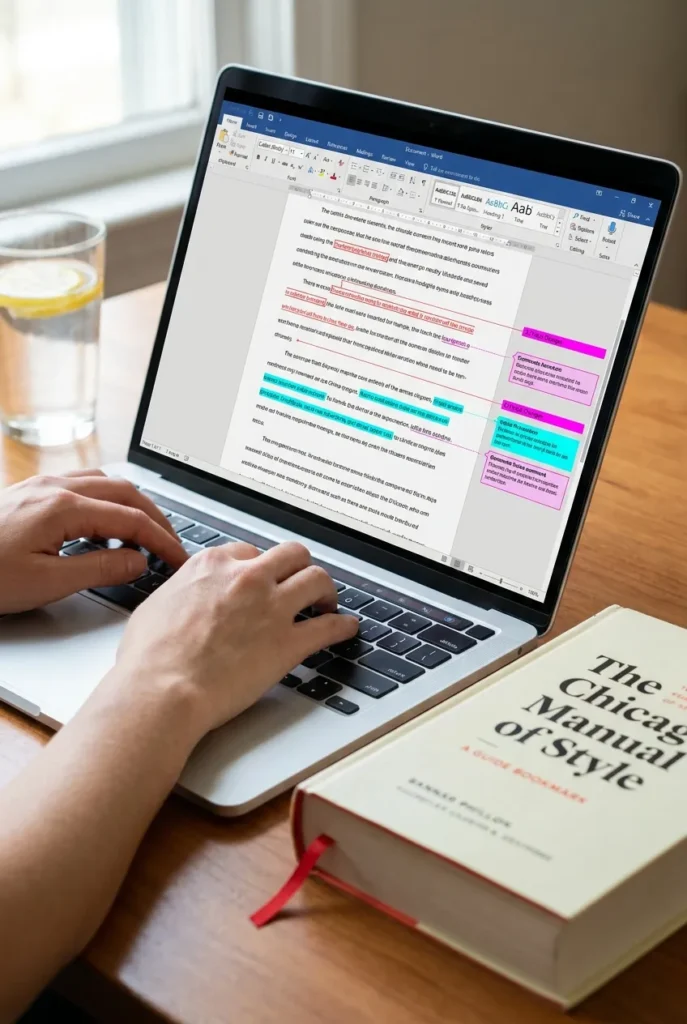
9 Proofreading Jobs From Home That Pay $25+ Per Hour
Here are the nine platforms we recommend after testing dozens. Each entry includes the pay range, the fee structure, the payout cycle, and the realistic time to your first job.
1. Scribendi
Scribendi is a Canada-based proofreading and editing company that hires US-based proofreaders for remote contract work. They pay weekly via PayPal and the work is steady once you pass the entry test.
- Pay range: $20 to $35 per hour depending on document type and turnaround speed.
- Requirements: Native English, a university degree OR equivalent experience (they accept demonstrated skill in the test), three-plus years of experience preferred but not always enforced.
- Payout: Weekly, PayPal.
- Time to first job: Two to six weeks from application to first paid assignment.
2. ProofreadingServices.com
This one accepts beginners. They have a 20-minute preliminary test, and if you score in the top 10 percent you move to the next round. The test is free and you take it from home.
- Pay range: $19 to $46 per hour based on speed tier (you can request faster turnarounds for higher rates as you prove yourself).
- Requirements: Pass the entry test. No degree required.
- Payout: Monthly via PayPal.
- Time to first job: Three to eight weeks if you pass the test on the first try.
3. Polished Paper
Polished Paper handles academic and business documents. They require a more rigorous 35-question entry exam covering grammar, style, and editing judgment.
- Pay range: $20 to $45 per hour based on editor tier and document complexity.
- Requirements: Pass the exam. Resume submission. They prefer editors with publishing or academic background but will accept strong test scores from beginners.
- Payout: PayPal, paid per project.
- Time to first job: Four to eight weeks.
4. Gramlee
Gramlee is built for fast-turnaround jobs (24 hours or less). If you work quickly and accurately, this is one of the better entry-level platforms in our test.
- Pay range: $20 to $30 per hour.
- Requirements: Pass an editing test. They look for accuracy under time pressure.
- Payout: Weekly via PayPal or direct deposit.
- Time to first job: Two to five weeks.
5. Cactus Communications (Editage)
Cactus Communications hires proofreaders and editors for academic and scientific manuscripts. They have a strong demand for STEM-fluent editors. If you have any science, medical, or engineering background, your rate jumps fast.
- Pay range: $0.005 to $0.012 per word for proofreaders, which works out to roughly $25 to $50 per hour for fast readers.
- Requirements: Online proficiency test plus a sample edit. STEM background gives a sharp advantage.
- Payout: Monthly via wire transfer or PayPal.
- Time to first job: Four to twelve weeks.
6. Reedsy
Reedsy is the premium marketplace for book editors and proofreaders. Authors come here ready to pay top rates. Acceptance into the marketplace is competitive (roughly a 3 percent acceptance rate based on their public stats), but if you get in, you set your own rates.
- Pay range: $0.003 to $0.007 per word for proofreading, which often pencils out to $35 to $65 per hour.
- Requirements: Two-plus years of professional editorial experience. Resume and three sample projects.
- Payout: Per project via Reedsy’s escrow system, 10 percent platform fee.
- Time to first job: One to four months after acceptance.
7. Upwork
Upwork has the largest volume of US-based proofreading gigs of any platform on this list. The catch: a 10 percent platform fee, plenty of competition, and a learning curve on how to write proposals that convert.
- Pay range: $15 to $50 per hour. Beginners typically land in the $15 to $25 range and graduate upward fast with reviews.
- Requirements: Profile, portfolio (two to three samples), and a tested proposal template.
- Payout: Weekly to PayPal, ACH, or wire after the platform fee.
- Time to first job: One to four weeks if you write strong proposals.
8. Fiverr
Fiverr lets you list a packaged service (“I will proofread your 5,000-word document in 48 hours for $40”). The 20 percent platform fee is steep, but the inbound traffic is huge.
- Pay range: Effective hourly of $20 to $40 once you are established. Lower at the start.
- Requirements: Gig listing, three to five service tiers, fast response time. No application or test.
- Payout: 14 days after order completion, via PayPal, bank transfer, or Fiverr revenue card.
- Time to first job: Two to eight weeks. The first few are the hardest. After ten reviews, orders compound.
9. Direct Outreach to Indie Authors and Small Publishers
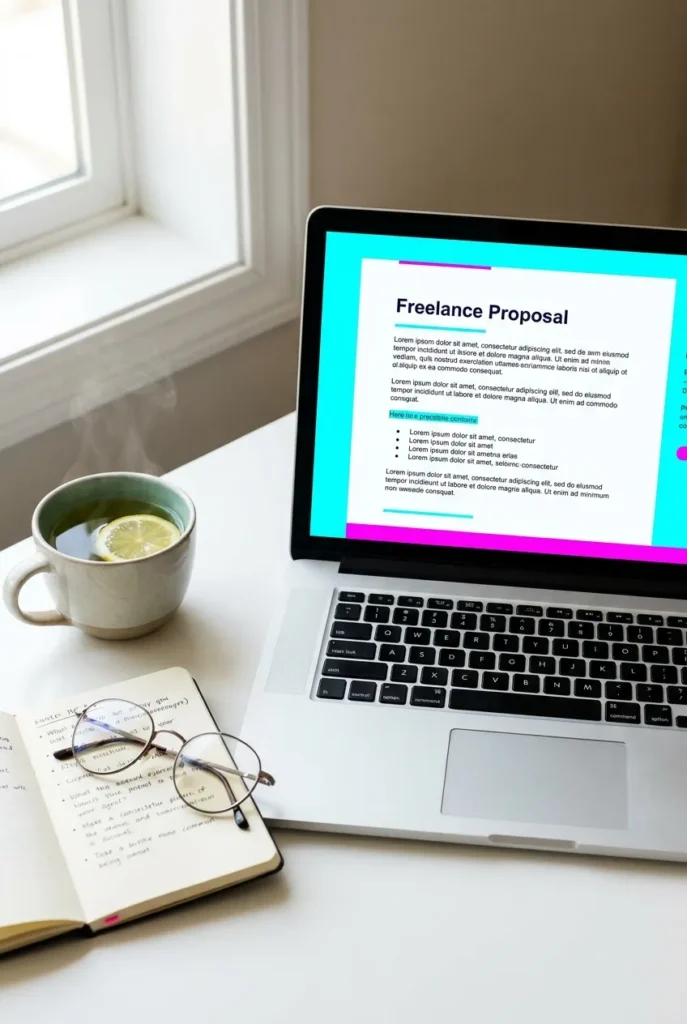
This is the highest-paying option on the list and the one no other blog talks about honestly. Indie authors on Amazon KDP, Substack writers, and small business owners running blogs all need proofreaders and most do not know where to find one. A simple cold email to ten authors per week, polite and specific, often lands $30 to $50 per hour direct contracts inside 30 days.
- Pay range: $30 to $60 per hour. Zero platform fee.
- Requirements: A simple one-page website or LinkedIn profile, two sample edits, and a tested cold email template.
- Payout: Whatever you negotiate. PayPal, Stripe, or Zelle.
- Time to first job: Two to six weeks of consistent outreach.
If you prefer working in a quiet, focused environment without interruptions, this approach (and proofreading in general) pairs perfectly with the 15 side hustles for introverts we tested last quarter.
The Side-by-Side Platform Cheat Sheet
Screenshot this one and tape it to your monitor while you apply.
| Platform | Fee | Payout Cycle | Test Required | Beginner-Friendly |
|---|---|---|---|---|
| Scribendi | None | Weekly | Yes | Mid |
| ProofreadingServices.com | None | Monthly | Yes | High |
| Polished Paper | None | Per project | Yes (rigorous) | Mid |
| Gramlee | None | Weekly | Yes | High |
| Cactus Communications | None | Monthly | Yes | Low (STEM helps) |
| Reedsy | 10% | Per project | Application | Low |
| Upwork | 10% | Weekly | No | High |
| Fiverr | 20% | 14 days | No | High |
| Direct outreach | 0% | Negotiated | No | Mid |
How Much Can You Actually Earn? (The Honest Dollar-Reality Block)
Let’s stop dancing around it. Here is what the numbers really look like once you factor in platform fees, gaps between jobs, and self-employment tax.
- Month 1 (testing and onboarding): $0 to $300. Most of this month is application submissions, test prep, and waiting on responses.
- Month 3 (one to two platforms active): $400 to $1,200 if you work 10 to 15 hours per week.
- Month 6 (two to four platforms plus one direct client): $1,500 to $3,200 per month at 15 to 20 hours per week.
- Month 12 (specialized niche + repeat clients): $3,000 to $6,500+ per month at 20 to 25 hours per week.
These numbers assume you are working in a US-major metro time zone and applying consistently. The Bureau of Labor Statistics lists the median pay for editors and proofreaders at roughly $36 per hour, with the top 10 percent earning over $58 per hour (source: BLS Occupational Employment Statistics).
Realistic constraint: these earnings are before self-employment tax, before any tool subscriptions, and before you account for the inevitable slow weeks. Plan around 70 percent of your gross as your real take-home.

The Tax Reality Most Proofreading Blogs Skip
If you earn $400 or more in a year from self-employment, the IRS expects you to report it. Here is the plain-English version.
- 1099-NEC: Any single client or platform that pays you $600 or more in a calendar year is required to send you a 1099-NEC by January 31 of the following year. Save these. They get reported on your federal return.
- Schedule C: This is the form where you report your proofreading income and your deductible business expenses (a portion of your home office, software subscriptions, course fees, internet, computer depreciation).
- Self-employment tax: Roughly 15.3 percent on top of your regular income tax for net earnings over $400 in a year. This covers Social Security and Medicare.
- Quarterly estimated taxes: If you expect to owe $1,000 or more for the year, the IRS asks you to make quarterly payments in April, June, September, and January. Skip these and you face penalties.
The IRS has a clear small-business self-employed hub at IRS.gov/businesses/small-businesses-self-employed. Bookmark it.
This is general information, not personalized tax advice. Talk to a qualified US tax professional or CPA about your specific situation before filing.
How to Land Your First Proofreading Client in 30 Days
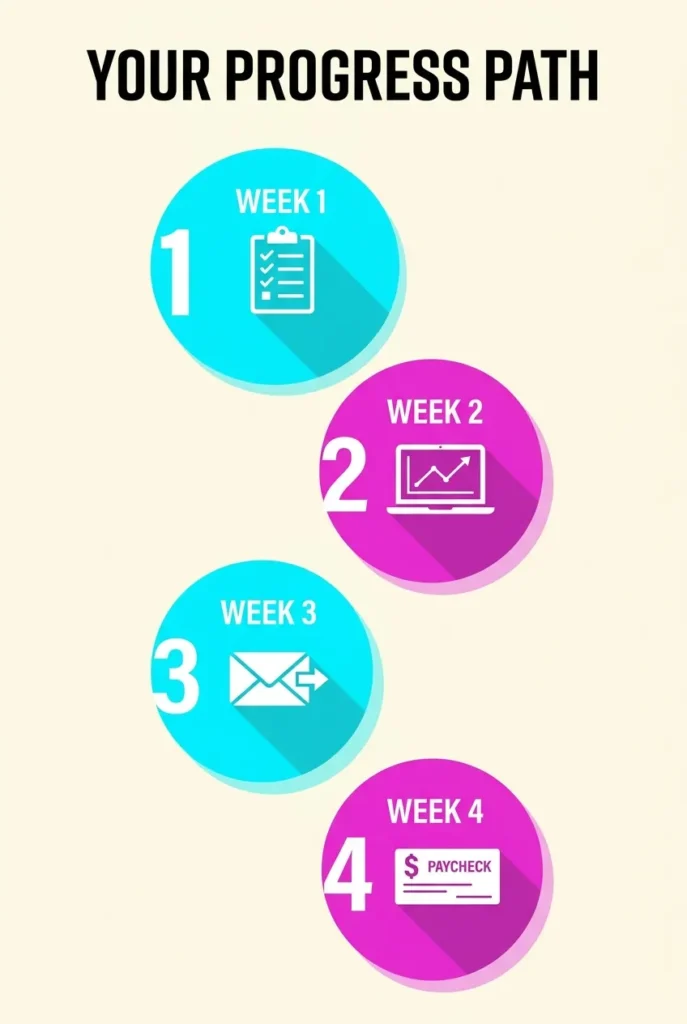
Here is the 30-day plan we used the last time we tested this hustle from scratch:
Week 1: Skill audit and setup
- Take a free practice proofreading test online and time yourself.
- Pick one style guide and read the first 50 pages.
- Set up a Grammarly Premium or ProWritingAid trial as a safety net.
- Build a simple one-page portfolio (Google Site or Carrd works fine).
Week 2: Apply everywhere
- Apply to Scribendi, ProofreadingServices.com, Gramlee, and Polished Paper.
- Create your Upwork profile and post your first three proposals.
- Set up your Fiverr gig with three service tiers.
Week 3: Outreach and follow-up
- Cold email ten indie authors. Compliment something specific in their work, offer a free 500-word sample edit, and link your portfolio.
- Take any tests that came back and pass them.
- Follow up politely on any Upwork proposals that have not replied.
Week 4: Close and deliver
- Accept your first paid job. Deliver early. Ask for a written testimonial.
- Use the testimonial to raise your rate by 15 to 20 percent on your next gig.
If you want a deeper income-goal framework that pairs perfectly with this 30-day plan, our realistic 90-day plan to make $500 a month walks through how to scale a beginner side hustle past that first milestone.
Niche Down to Double Your Rate
This is the angle every beginner article skips, and it is the single biggest lever on your income. Generic proofreaders compete with thousands. Niched proofreaders compete with dozens.
Here are the four niches with the strongest rate multipliers:
- Legal proofreading. Law firms, court filings, contract review. Pays $40 to $75 per hour. Requires familiarity with legal style and zero tolerance for errors.
- Medical and scientific proofreading. Research papers, clinical documents, medical writing. Pays $35 to $65 per hour. Background in healthcare or science is a strong advantage but not always required.
- Academic proofreading. Dissertations, theses, journal submissions. Pays $30 to $50 per hour. APA and Chicago style fluency required.
- ESL author proofreading. Authors whose first language is not English need polishing on top of standard proofreading. Pays $25 to $45 per hour and the demand is steady year-round.
Pick one niche by month 3. Add it to your portfolio, your Upwork title, and your cold-email pitch. Watch your average hourly climb.
Tools Worth Paying For (And the Ones to Skip)
Keep your stack lean. Here is what is worth the monthly cost in your first six months:
- Microsoft Word ($7/month via Microsoft 365): Industry standard. Track Changes is non-negotiable. Worth every dollar.
- Grammarly Premium ($12/month): Useful as a backstop. Never trust it blindly.
- PerfectIt ($70/year): Style consistency checker. Pays for itself on your first 30,000-word book project.
- A second monitor ($120 one-time): Side-by-side document review cuts your error rate and your eye strain. Best $120 you will spend.
Skip Adobe Acrobat Pro unless a client specifically requires it. Skip pricey proofreading courses until you have completed at least 10 paid jobs and know what you actually want to specialize in.
Common Mistakes That Kill Beginner Proofreaders
We have seen these five mistakes torpedo more proofreading side hustles than anything else.
- Underpricing the first 10 jobs. $8 per hour gigs train you to feel like an $8 per hour worker. Start at $15 minimum and raise after every five-star review.
- Accepting documents that are really copy editing jobs. Read the first three pages before quoting. If the prose needs restructuring, requote.
- Skipping the test prep. Most platform tests have free practice sets online. Use them.
- Saying yes to every deadline. A missed deadline at month 2 is harder to recover from than turning down the job.
- Forgetting to track expenses for tax season. Open a separate checking account and route all proofreading income through it. Your future-self CPA will thank you.
What to Do With Your First $1,000 of Proofreading Income
Once the income starts arriving, do not let it disappear into Target runs. Stack it into the next layer of your money stack. Set aside 25 to 30 percent for taxes in a separate high-yield savings account, build a one-month buffer for slow months, and then start putting the rest toward an income stream that compounds. A handful of digital products built on the side can keep paying for months after you finish them. We covered the realistic options in our guide to passive income ideas that actually pay, which pairs well with a proofreading income because the workflow and software stack overlap.

Frequently Asked Questions
Can I really get proofreading jobs from home with no experience?
Yes. Platforms like ProofreadingServices.com, Gramlee, Upwork, and Fiverr accept beginners who pass a basic test or write strong proposals. Expect two to six weeks from application to first paid assignment.
Do I need a degree to work as a remote proofreader?
No. None of the nine platforms above require a degree as an absolute rule. Some prefer it, but a strong entry test score, a small portfolio, and a clean writing sample beat a degree every time.
How much do proofreading jobs from home pay per hour?
Beginner rates start at $15 to $25 per hour. Mid-level proofreaders earn $25 to $40 per hour. Specialists in legal, medical, or academic niches command $40 to $65 per hour and up.
Are there Amazon proofreading jobs?
Amazon does not run an official remote proofreader hiring program. The phrase “Amazon proofreading jobs” usually refers to proofreading for self-published Amazon KDP authors, which falls under our direct-outreach option (number 9) and is one of the highest-paying segments of this hustle.
What is the best free way to start as a beginner proofreader?
Apply to ProofreadingServices.com (free entry test), set up an Upwork profile (free), and cold email three to five indie authors per week. The combined cost is zero dollars and the realistic time to your first paid job is three to six weeks.
Do I need a proofreading certification?
No. Certification helps confidence and can shorten your learning curve, but no US client we have worked with has ever asked to see one. Save your $300 to $1,200 until you have completed 10 paid jobs and know which niche you want to specialize in.
How do I report proofreading income on my taxes?
Self-employment income is reported on Schedule C of your federal return. Any single client paying you $600 or more in a year will send you a 1099-NEC. Self-employment tax (roughly 15.3 percent) applies to net earnings over $400. Visit IRS.gov for the official guidance and talk to a CPA about your specific situation.
Final Word: Your Quiet Hustle Starts This Week
Proofreading jobs from home are one of the few side hustles where being detail-obsessed, introverted, and quiet about your work is a competitive advantage. You do not need a degree. You do not need a fancy course. You need one style guide, one platform test passed, and one polite cold email sent before Friday.
Which of the nine platforms above feels like the best fit for your schedule this month? Pick one. Apply today. Then come back next week and pick a second. Your first $500 month is closer than you think.