
Most articles about passive income lie to you. They promise sleep-while-you-earn riches, then list “open a high-yield savings account” like that’s going to change your life. After testing nine of these income streams across the last four years, I can tell you exactly which ones pay, how much they really earn, and how long the upfront work actually takes.
These are the realistic passive income ideas that work in 2026. Not seven-figure fairy tales. Real numbers, real timelines, and the honest truth about how much active work each one demands before it goes hands-off.
You’ll find specific dollar ranges, startup costs, and a matching framework at the end to help you pick the right stream for your situation. Let’s get into it.

What Passive Income Really Means (And What It Doesn’t)
Passive income is money you earn without actively trading hours for it. The IRS has a strict legal definition involving rental activity and limited partnerships, but for the rest of us, it’s simpler: you build an asset once, then it pays you over and over.
Here’s the part nobody admits. There is no such thing as zero-effort income. Every “passive” stream on this list requires real upfront work, ongoing maintenance, or capital you’ve already saved. The passive part kicks in after you do the hard thing first.
A useful way to think about it: passive income is time-leveraged income. You front-load the effort. You collect the payoff for months or years afterward. That’s the deal.
If you’re starting with nothing, you can still build a real stream. Check out our breakdown of side hustles you can start with no money for the bootstrap-friendly options that pair best with the ideas below.
The Honest Reality Check Before You Pick One
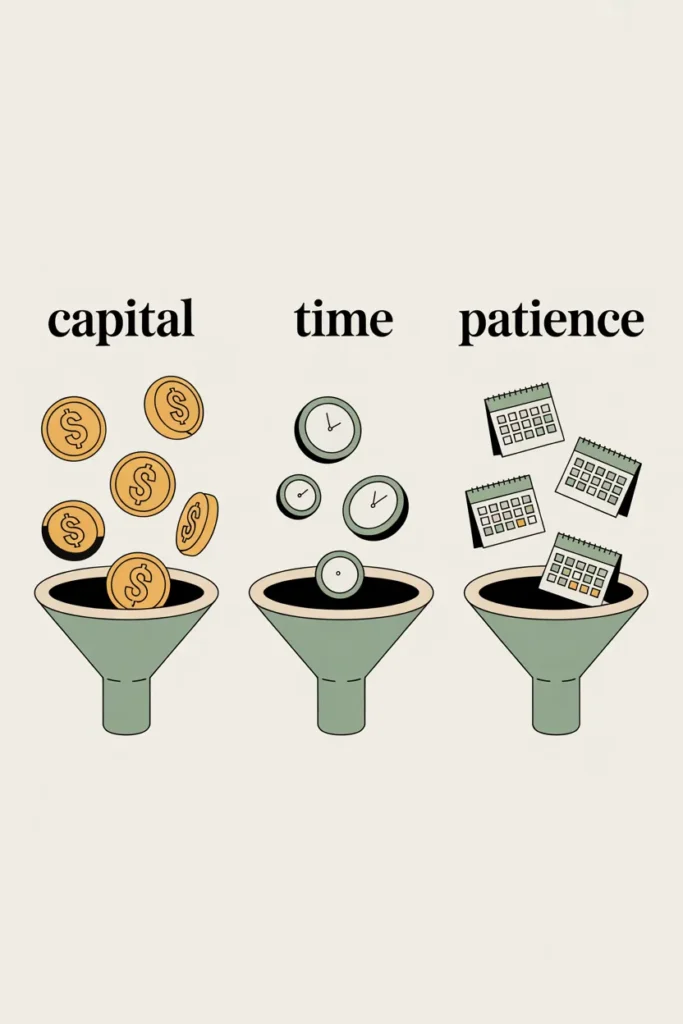
Before diving into specific ideas, run this gut check. Three filters separate ideas that pay from ideas that drain you.
- Capital filter. How much money can you put in upfront without losing sleep? Some streams need $50. Others need $5,000.
- Time filter. Be honest about how many hours per week you can actually sustain for the next 90 days. Not what you wish. What you can do.
- Patience filter. Can you wait 6 to 12 months to see meaningful income? Most of the highest-paying streams need this runway.
If any one of these doesn’t fit your reality, the idea isn’t realistic for you right now. Pick a different one. Force-fitting an idea that doesn’t match your filters is how people quit in week three.
12 Realistic Passive Income Ideas With Actual Numbers
Each idea below includes startup cost, time to first dollar, ongoing weekly effort once it’s running, and the realistic monthly income range for a part-time operator working 10 to 15 hours per week.
1. Dividend Stock Investing
Startup cost: $500 to $5,000+ to start meaningfully. Time to first dollar: 30 to 90 days. Ongoing effort: 1 hour per month. Realistic monthly range: $5 to $400 for most beginners, scaling with portfolio size.
Buy shares of established companies that pay quarterly dividends. A $10,000 investment in a fund yielding 4% pays about $400 per year, or roughly $33 per month. It’s the slowest path on this list but also the most genuinely passive once you’ve funded the account.
Look at broad dividend ETFs like SCHD or VYM through Fidelity, Vanguard, or Schwab. Avoid chasing yields above 8%, which usually signal trouble. For trustworthy investor education, the SEC’s Investor.gov is the gold standard.

2. High-Yield Savings Accounts
Startup cost: Whatever you have. Time to first dollar: 30 days. Ongoing effort: Zero. Realistic monthly range: $4 to $40 per $10,000 saved.
The most boring idea on the list, but also the safest. Top HYSAs in 2026 pay around 4% to 5% APY through banks like Ally, Marcus, and SoFi. It won’t make you wealthy, but it beats checking accounts that pay 0.01%.
Use this as your tax reserve account from any of the other streams below. Two birds, one savings account.
3. Real Estate Investment Trusts (REITs)
Startup cost: $100 to $1,000. Time to first dollar: 30 to 90 days. Ongoing effort: Minutes per month. Realistic monthly range: $10 to $200 for most starting portfolios.
REITs let you collect rental income without owning physical property. You buy shares of a fund that owns malls, apartments, warehouses, or storage facilities. They legally must pay out 90% of taxable income as dividends.
Public REITs trade like stocks through any brokerage. Skip non-traded private REITs unless you fully understand the lockup terms. For tax treatment, REIT dividends are usually taxed as ordinary income, so factor that in.
4. Etsy Digital Downloads
Startup cost: $0 to $50. Time to first dollar: 4 to 12 weeks. Ongoing effort: 2 to 5 hours per week. Realistic monthly range: $200 to $2,500 once established.
Design once, sell forever. Printables, planners, templates, wall art, and budgeting trackers all sell well on Etsy because buyers download instantly and you never ship a thing. The catch: the marketplace is crowded, so niche specificity is everything.
A “budget planner” listing dies in page 14. A “weekly meal planner for keto families of four” finds its buyer. Niche hard. We have a full breakdown of Etsy printables that actually sell including the real niches winning in 2026.

5. Print on Demand
Startup cost: $0 to $100. Time to first dollar: 4 to 12 weeks. Ongoing effort: 3 to 6 hours per week. Realistic monthly range: $100 to $1,500 for most part-time operators.
Upload designs to t-shirts, mugs, tote bags, or posters through Printful, Printify, or Gelato. They handle printing and shipping. You collect a margin. Margins are slim (usually 20% to 40%), so volume and marketing matter more than design talent.
Funny saying shirts and niche pride graphics still outsell pretty art. Lean into specific identities: “Plant Mom” beats “I love plants” every time.
6. Affiliate Marketing Through Pinterest
Startup cost: $0 to $50. Time to first dollar: 30 to 90 days. Ongoing effort: 3 to 5 hours per week. Realistic monthly range: $100 to $1,500 for beginners; $3,000+ for experienced creators.
Pin product recommendations to Pinterest using your affiliate links. When someone clicks and buys, you earn a commission. The Amazon program is the most beginner-friendly, though commission rates are low (1% to 10%). Higher-paying programs include ShareASale, Impact, and CJ Affiliate.
The trick is going where the searches are. Pinterest users buy with intent. They search “fall capsule wardrobe” planning to shop, not browse. Match your pins to that buyer intent.
If you’re starting from zero, our guide on making your first $100 on Pinterest walks through the exact setup.
7. Self-Published Kindle Books
Startup cost: $0 to $300. Time to first dollar: 2 to 6 months. Ongoing effort: Minimal once published. Realistic monthly range: $50 to $1,500 per book.
Amazon’s Kindle Direct Publishing lets anyone publish an ebook. Non-fiction how-to books in tight niches (van life budgeting, sourdough for beginners, ADHD time management) sell consistently if the topic has search demand.
The realistic version: most first books earn $20 to $200 per month forever. Authors who build a backlist of 5 to 10 books in the same niche can reach $1,000+ monthly. The compounding only works if you treat it like a catalog.
8. YouTube Channel With Ad Revenue
Startup cost: $0 to $500. Time to first dollar: 6 to 18 months. Ongoing effort: 5 to 15 hours per week (active), passive after retirement. Realistic monthly range: $100 to $5,000+ once monetized.
YouTube pays creators through ads, sponsorships, and affiliate links. Old videos keep earning for years if they target evergreen searches. Tutorials, reviews, and explainer content age best.
The hard truth: YouTube isn’t passive while you’re building it. The passive part comes after you have 50 to 100 videos earning steady views. Before that, it’s a content job.
9. Stock Photography and Video
Startup cost: $0 to $500 (camera assumed owned). Time to first dollar: 2 to 6 months. Ongoing effort: Variable. Realistic monthly range: $50 to $800 for most contributors.
Sell photos and short clips on Shutterstock, Adobe Stock, and Getty’s iStock. Specific business and lifestyle scenes (diverse hands typing on laptops, real home office setups, authentic food prep) outsell generic landscapes by a wide margin.
The catch: per-download payouts are tiny (often $0.25 to $2). You need volume in your portfolio for the math to work. 500+ images is when many contributors say earnings start feeling meaningful.

10. Renting Out Storage Space or a Parking Spot
Startup cost: $0. Time to first dollar: 2 to 8 weeks. Ongoing effort: 1 hour per month. Realistic monthly range: $50 to $500.
If you have an empty garage, attic, basement, or unused driveway, platforms like Neighbor and SpotHero connect you to renters. It’s hyper-local, the math depends on demand in your zip code, and earnings are real.
Urban driveways near event venues, airports, or downtown cores can pay $150 to $300 per month. Rural storage usually pays less but has lower competition.
11. Niche Affiliate Website
Startup cost: $50 to $300 per year (hosting + domain). Time to first dollar: 6 to 12 months. Ongoing effort: 5 to 10 hours per week early; far less later. Realistic monthly range: $200 to $4,000+ after 12 to 24 months.
Build a site around a tight topic (best dehydrators, RV battery comparisons, dog DNA test reviews) and rank in Google. Income comes from affiliate commissions and display ads.
This is the longest runway on the list. It’s also one of the most genuinely passive once it ranks. A site earning $2,000 per month often only needs 4 to 8 hours per month to maintain.
12. Vending Machine Routes
Startup cost: $1,500 to $5,000 per machine. Time to first dollar: 4 to 8 weeks. Ongoing effort: 3 to 5 hours per week per machine. Realistic monthly range: $150 to $400 per machine.
The unsexy passive income idea that quietly pays. Buy a used machine, secure a location (laundromats, gyms, auto shops), stock it weekly, collect cash. Profit per machine is modest, but the model scales by adding machines.
Location is everything. A machine in a high-foot-traffic spot earns 5x what the same machine earns in a dead hallway.

The Matching Framework: Pick Your Stream
Here’s the original framework competitors don’t publish. Match yourself to the right starting point based on what you actually have.
| Your Starting Point | Best 2 Streams | Why |
|---|---|---|
| Under $100 + 5 hrs/wk | Etsy printables, Pinterest affiliate | Lowest startup, fastest first dollar |
| Under $500 + 10 hrs/wk | Print on demand, KDP ebooks | Builds catalog assets that compound |
| $500 to $2,000 + 2 hrs/wk | REITs, dividend ETFs | Money-time tradeoff favors capital deployment |
| $2,000 to $5,000 + 5 hrs/wk | Vending machines, niche website | Capital plus active work creates real cash flow |
| $5,000+ + 1 hr/wk | Dividend portfolio, REITs | Compounding does the heavy lifting |
Screenshot this. It’s worth more than another listicle.
The Tax and Platform Fee Reality
Two things kill side-hustle income that nobody warns you about: platform fees and taxes. Both are non-negotiable.
Most platforms take 5% to 20% off the top. Etsy charges $0.20 per listing plus 6.5% transaction fees plus payment processing. Amazon KDP keeps 30% to 65% of royalties. Affiliate networks pay 30 to 90 days after the sale.
Taxes hit harder. In the US, passive income is generally taxable. Dividend income, rental income, and royalty income all get reported. The IRS expects quarterly estimated payments if you owe over $1,000 in a year. The IRS passive activity guidelines explain the legal definition in detail.
Practical rule: set aside 25% to 30% of every dollar of net profit in a separate savings account. Pay your quarterly estimates. Don’t let April surprise you.

How to Actually Start: The 30-Day Launch Plan
Reading about passive income won’t earn you a dollar. Picking one idea and committing for 30 days will. Here’s the four-week launch plan I use myself:
- Week 1. Pick one idea from the matching framework. Just one. Open the required accounts (brokerage, Etsy seller, KDP, whatever applies). Read every fee disclosure.
- Week 2. Build the minimum viable asset. One listing, one pin, one ETF purchase, one video. Stop polishing and publish.
- Week 3. Publish two more. Iterate based on what week 2 taught you.
- Week 4. Measure honestly. Did anything happen? If yes, scale that. If no, adjust the asset, not the idea.
The biggest failure mode is starting five streams at once and finishing none. Stack streams one at a time after the first is producing $100+ per month consistently.

Common Mistakes That Sink Beginners
After watching dozens of people start and quit, these are the predictable killers:
- Chasing yields, not durability. A 14% dividend stock usually crashes within a year. Boring 3% to 5% yields compound over decades.
- Quitting at week 3. Almost every stream has a dead zone where nothing happens. People who push through get paid. People who pivot don’t.
- Treating it like a side gig, not an asset. Side gigs trade hours for cash. Assets keep paying. Always ask: what am I building that still exists in 18 months?
- Skipping the boring stuff. Bookkeeping, taxes, and contracts feel like a drag. Skip them and you’ll spend triple the time fixing problems later.
- Listening to TikTok gurus. If someone is selling you a $997 course on passive income, their passive income is the $997 course. Look for free, specific, dated tutorials from operators who show their numbers.
Frequently Asked Questions
How do I make $1,000 a month passively?
The two most realistic paths for beginners are Etsy printables and Pinterest affiliate marketing. Both can hit $1,000 per month within 4 to 9 months with consistent effort. For pure-investment paths, you’d need roughly $250,000 to $300,000 invested in a 4% to 5% yield portfolio to generate $1,000 monthly without touching principal.
How can I turn $10,000 into $100,000 quickly?
Honestly, you can’t, not safely. Compounded at the historical S&P 500 average of about 10% per year, $10,000 grows to $100,000 in roughly 24 years. Anyone promising 10x in under 5 years is either lucky, lying, or selling something. The realistic move is consistent contributions to dividend ETFs plus building one active asset (Etsy, KDP, niche site) that adds cash flow you can reinvest.
What is the easiest passive income to make?
A high-yield savings account is technically the easiest, but it pays the least. For meaningful income with low difficulty, Etsy printables and REIT dividends through a brokerage are the most beginner-friendly. Both have low startup costs and don’t require special skills.
What creates 90% of millionaires?
Real estate appreciation and small business equity create most US millionaires, often combined with steady investing in index funds. The viral statistic comes from work by Andrew Carnegie and modern wealth studies. None of these are “passive” at the start. They become passive after years of active building.
Can I really make passive income with no money?
Yes, but it requires more time upfront. Print on demand, Etsy digital downloads, Pinterest affiliate marketing, and stock photography all have near-zero startup costs. You’re trading time and skill for capital. It works, but the timeline is longer.
How many income streams should I build?
Start with one. Get it to $100+ per month consistently before adding a second. Most successful operators run 2 to 4 streams. Past that, attention scatters and quality drops.
Are passive income earnings taxed?
Yes, almost always. Dividends, interest, royalties, and rental income are all taxable in the US. Tax treatment varies by income type. This article is general information, not tax advice, so consult a qualified US tax professional for your specific situation.
The Bottom Line on Realistic Passive Income
The honest truth: passive income is the most misunderstood phrase in personal finance. The streams that work require real upfront effort, real capital, or real patience. Often all three. There’s no shortcut, but the math compounds beautifully for people who pick one realistic stream and stick with it.
Pick the one that fits your capital, time, and patience filters. Build the first asset this week. Measure honestly at day 30. The compounding will surprise you in year two.
Which idea from the matching framework fits your situation right now? Save this guide and start with one. Future-you will thank present-you for not chasing the get-rich-quick stuff.