
If you’ve been hunting for faceless YouTube niches that make money without ever pointing a camera at your forehead, this guide was written for you. We’re talking to the 9-to-5 worker who wants a second income stream by month six, the stay-at-home parent looking to build a digital asset between nap times, and the introvert who would rather edit a script in silence than film a vlog. (We see you. We are you.)
Most articles on this topic hand you a list of 100 niches, sprinkle in some inflated CPM screenshots, and send you off to fail. We’re doing this differently. Every niche below comes with a realistic US RPM range, the actual AI tool stack cost it requires, and a Pinterest distribution angle you can use to fast-track traffic. By the end, you’ll have a ranked shortlist and the math to back it.
Quick disclosure before we go further: this article is general information, not personalized tax or financial advice. Faceless YouTube revenue is reportable income in the US, and you should consult a qualified CPA for your situation. Verified accurate as of May 2026. Always check the current YouTube Partner Program page before you sign up.

What Counts as a Faceless YouTube Channel in 2026
A faceless channel is one where the creator never appears on camera. Voiceovers, stock footage, AI-generated visuals, screen recordings, animations, and B-roll do all the heavy lifting. The creator runs the channel like a small media business: scripts get written, voices get recorded (often by AI), and visuals get assembled in an editor.
This format works because viewers care about the content, not the host’s face. A finance channel explaining index funds doesn’t need a person in the frame; it needs clear graphics and a trustworthy voice. That’s the entire bet.
The faceless model also pairs beautifully with Pinterest. Every video idea is also a pin idea, which means you can drive Pinterest traffic to your YouTube channel and stack two distribution channels with one piece of content. We’ll come back to this in the niche breakdowns below.
How Faceless YouTube Channels Actually Make Money
There are four real revenue streams. Most successful faceless channels stack at least three.
AdSense (YouTube Partner Program). This is the main one. Once you hit the YPP threshold of 1,000 subscribers plus 4,000 public watch hours over 12 months (or 1,000 subs plus 10 million Shorts views in 90 days), you can turn on monetization. According to YouTube’s official Partner Program eligibility page, those are the current floors for full AdSense access. YouTube takes 45% of ad revenue; you keep 55%.
Affiliate marketing. You drop tracked links in your video description and earn a commission when viewers buy. This is where finance, tech, and AI-tool channels print the real money.
Digital products. Notion templates, ebooks, courses, and presets sold to your audience. The margins are high because the product is digital.
Sponsorships and brand deals. Once you cross roughly 10,000 to 50,000 subscribers in a clear niche, brands will pay you flat fees to mention them.
A reality check before we go further: AdSense alone rarely makes a faceless channel rich. The channels pulling five and six figures monthly almost always stack affiliate income and digital products on top. Treat AdSense as the floor, not the ceiling.
The Difference Between CPM and RPM (Read This Before You Pick a Niche)
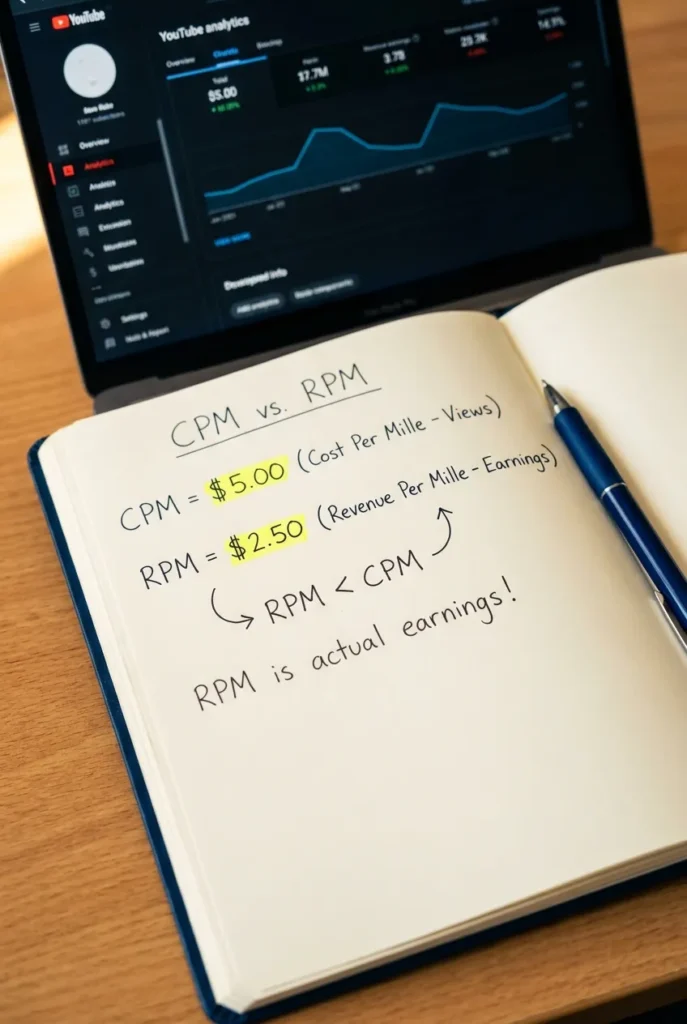
CPM is what advertisers pay per 1,000 ad impressions. RPM is what you actually take home per 1,000 video views after YouTube’s cut and after factoring in non-monetized views. A channel might have a $20 CPM and a $7 RPM. Most niche-ranking articles quote CPM because the numbers look juicier. We’re going to quote RPM because that’s the number that pays your rent.
For more on stacking income streams realistically, see our 90-day plan for building your first $500 a month from a side hustle.
The RPM × Reps × Reality Filter (Use This to Pick Your Niche)
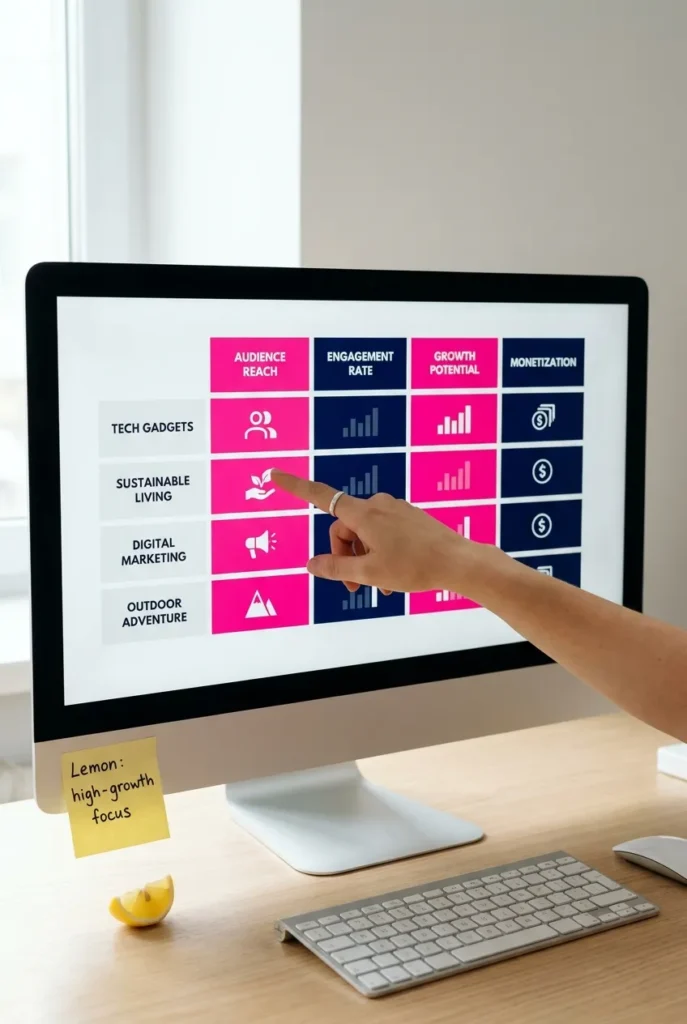
Before listing niches, we built a four-column filter to score each one. This is the framework you’ll use to make the final call. Screenshot it.
| Niche | US RPM Range | Production Time per Video | Pinterest Pull | Beginner Difficulty |
|---|---|---|---|---|
| Personal Finance | $15–$30 | 6–10 hrs | High | Medium |
| AI News & Tools | $8–$20 | 3–6 hrs | High | Low |
| History Explainer | $4–$10 | 5–8 hrs | Medium | Medium |
| Motivation & Mindset | $2–$6 | 2–4 hrs | High | Low |
| Business Case Studies | $10–$25 | 8–12 hrs | Low | High |
| True Crime / Mystery | $3–$8 | 6–10 hrs | High | Medium |
| Tech Reviews (Voiceover) | $7–$18 | 4–7 hrs | Medium | Medium |
| Cooking & Recipes | $5–$12 | 3–5 hrs | Very High | Low |
| Kids’ Educational | $1–$3 | 5–8 hrs | Low | High |
| Health & Wellness | $8–$20 | 5–8 hrs | High | Medium |
RPM ranges are pulled from creator surveys and reporting on niche AdSense rates across Mediavine, Raptive, and Tubular Insights coverage of YouTube AdSense rates. Treat the numbers as ballparks, not guarantees. They drift with the ad market.
10 Faceless YouTube Niches That Make Money (Ranked)
We ranked these by a blend of US RPM, beginner accessibility, and Pinterest cross-promotion potential. The order is not random.
1. Personal Finance and Investing for Beginners
This is the top of our list and it’s not close. Personal finance carries one of the highest RPM ranges on YouTube because advertisers paying for finance leads (brokerages, banks, credit card companies) bid aggressively. A solid faceless finance channel covering topics like Roth IRAs, high-yield savings, and credit card strategy can land an RPM of $15 to $30 in the US market.
Content angle for faceless format: screen recordings of brokerage interfaces, animated explainers, voiceover walking through scenarios, on-screen text for key numbers.
Pinterest cross-promotion: extremely high. Money pins consistently outperform on Pinterest, especially when paired with a specific dollar amount in the title. Every video becomes a pin.
Earnings reality: a channel hitting 100,000 monthly views in this niche can realistically pull $1,500 to $3,000 in AdSense alone, before affiliate links to brokerages, budgeting apps, or credit cards layer on top.
Watch-outs: YouTube treats financial content carefully. Don’t give specific investment advice. Stick to education and process explanations. The IRS treats your AdSense and affiliate earnings as self-employment income reportable on Schedule C if you cross the $400 net earnings threshold, per IRS guidance on self-employment income. Plan accordingly and talk to a CPA.
2. AI News, Tools, and Tutorials
The AI niche exploded in 2023 and is still hot in 2026. Faceless creators here review tools, summarize AI news, and build tutorials around prompts. RPM lands in the $8 to $20 range, with affiliate income on AI software being the bigger prize. Many AI tools pay 20% to 30% recurring commission for as long as the referred user stays subscribed.
Content angle: screen recordings of AI tool dashboards, side-by-side comparisons, prompt walkthroughs, voiceover with on-screen text.
Pinterest cross-promotion: high. AI tool tutorials and prompt lists are some of the highest-saving pins on Pinterest right now.
Tool stack cost reality: building an AI-focused channel ironically requires paying for AI tools. A typical starter stack runs $60 to $100 a month: ChatGPT Plus ($20), ElevenLabs starter ($5 to $22), Canva Pro ($15), and a screen recorder like ScreenFlow or Camtasia one-time license. FTC AI labeling guidance applies if you publish realistic AI-generated visuals or voices; disclose appropriately under YouTube’s altered or synthetic content rules.

3. Business Case Studies and Documentary-Style Channels
Think MagnatesMedia or ColdFusion-style content: long-form deep dives into how companies rose and fell. These channels carry premium RPMs ($10 to $25) because the audience skews older and higher-income. The tradeoff is production time. A single 15-minute video can take 8 to 12 hours of research, scripting, and editing.
Content angle: archival footage, brand graphics, animated charts, professional voiceover.
Pinterest cross-promotion: low to medium. The audience tends to discover on YouTube directly, not Pinterest.
Earnings reality: case study channels are slow burners. Most don’t see real traction until video 30 or 40. The ones that break through become serious digital assets and command flat sponsorship fees of $5,000 to $20,000 per video at scale.
4. History Explainers and “Did You Know” Compilations
History does well as a faceless niche because the content is evergreen. A solid video on Roman engineering or WWII codebreakers can pull views for years. RPM lands in the $4 to $10 range, lower than finance but higher than motivation.
Content angle: Creative Commons archival footage, AI-generated historical visuals (label them per FTC and YouTube guidance), narrator voiceover, on-screen maps and timelines.
Pinterest cross-promotion: medium. History-themed pins do moderately well in education and homeschool niches.
Earnings reality: a faceless history channel at 200,000 monthly views might pull $800 to $2,000 in AdSense, with very limited affiliate opportunities. The play here is volume and longevity.

5. Cooking, Recipes, and “Cozy Kitchen” Content
This one surprises people because it seems hands-on, but you can run a cooking channel showing only the hands and the pan. Tasty-style overhead shots, no face required. RPM lands at $5 to $12, and Pinterest cross-promotion is off the charts. Recipe pins are some of the highest-saving content on the entire platform.
Content angle: overhead phone or DSLR shot, hands and pan only, voiceover or text-on-screen instructions.
Pinterest cross-promotion: very high. This is the niche where Pinterest can outpace YouTube in driving traffic to your blog if you also publish recipe posts.
Earnings reality: cooking channels often earn more from Pinterest-driven blog traffic plus display ads (Raptive, Mediavine Journey) than from YouTube AdSense. Raptive’s program minimum is 100,000 monthly sessions; Mediavine Journey starts at 10,000 monthly sessions per their published thresholds. Use YouTube as a discovery channel, monetize on the blog.
6. Motivation, Mindset, and Quote Compilations
This is the easiest niche to start and the hardest to grow profitably. RPM is low ($2 to $6) because the audience skews younger and ad bids are softer. The upside is fast content production: stock footage plus AI voiceover plus motivational script can produce a video in 2 to 4 hours.
Content angle: stock cinematic footage, calming or driving music, AI-generated voiceover, dramatic on-screen text.
Pinterest cross-promotion: high. Motivational quote pins still perform on Pinterest, particularly in the Sunday-evening planning window.
Earnings reality: a motivation channel needs serious volume to be worth it. We’re talking 500,000+ monthly views to make $1,000 to $2,500 in AdSense. The smart play is to use the audience to funnel them into a digital product (planner, journal, course) where margins are real.
7. True Crime, Mysteries, and Unexplained Stories
True crime carries a mid-range RPM ($3 to $8) but has one of the highest watch-time retention rates on YouTube. If you can hook viewers, they’ll stay for 15 minutes, which the algorithm loves.
Content angle: AI voiceover with a dramatic tone, archival news clips (fair use territory, tread carefully), animated reenactments, on-screen graphics with case timelines.
Pinterest cross-promotion: high. True crime pins, especially with mystery hook titles, save and click well.
Earnings reality: a true crime channel at 300,000 monthly views can land $900 to $2,400 in AdSense, with serious upside through Patreon (this audience pays for bonus episodes).

8. Tech Reviews and Product Roundups (Voiceover Only)
You don’t need to be on camera to review a phone, a laptop, or an app. Set up an overhead shot, narrate, and zoom on the product. RPM lands in the $7 to $18 range, and affiliate income through Amazon Associates and Impact-network programs is where the real money sits.
Content angle: overhead product shots, screen recordings, voiceover, on-screen specs and prices.
Pinterest cross-promotion: medium. Tech roundups perform on Pinterest in the gift-guide format around Black Friday and the holiday window.
Earnings reality: a faceless tech channel can land 8% to 10% commission on Amazon Associates plus higher rates from manufacturer-direct affiliate programs.
9. Health, Wellness, and Sleep Content
Sleep content (relaxing sounds, sleep stories, ASMR) and wellness explainers both fit the faceless format. RPM lands at $8 to $20 in the explainer subsection, lower in the pure sleep-sounds bucket.
Content angle: calming visuals, soft voiceover, ambient music, scientific citations on screen.
Pinterest cross-promotion: high. Wellness, self-care, and morning-routine pins perform extremely well on Pinterest.
Earnings reality: wellness channels can monetize through supplement and app affiliate programs, but the niche is competitive and YouTube applies stricter monetization standards to health claims. Stick to general education; avoid specific medical claims.
If you’re drawn to quiet, behind-the-scenes work that pairs well with this niche, our roundup of side hustles for introverts covers other low-talking income streams.
10. Kids’ Educational and Animation Channels
This one gets called out as a goldmine, but YouTube’s COPPA rules apply to content aimed at kids and the rules are strict. RPM is low ($1 to $3) because targeted advertising to children is restricted, and you can’t run personalized ads. The upside is global reach and high replay rates.
Content angle: animated characters (built in tools like CapCut, Adobe Express, or commissioned), simple educational scripts, AI or human voiceover.
Pinterest cross-promotion: low. The audience is on YouTube Kids, not Pinterest.
Earnings reality: hard niche to break into now, but channels that crack it can pull millions of views. Treat this as a long-term play, not a quick win.
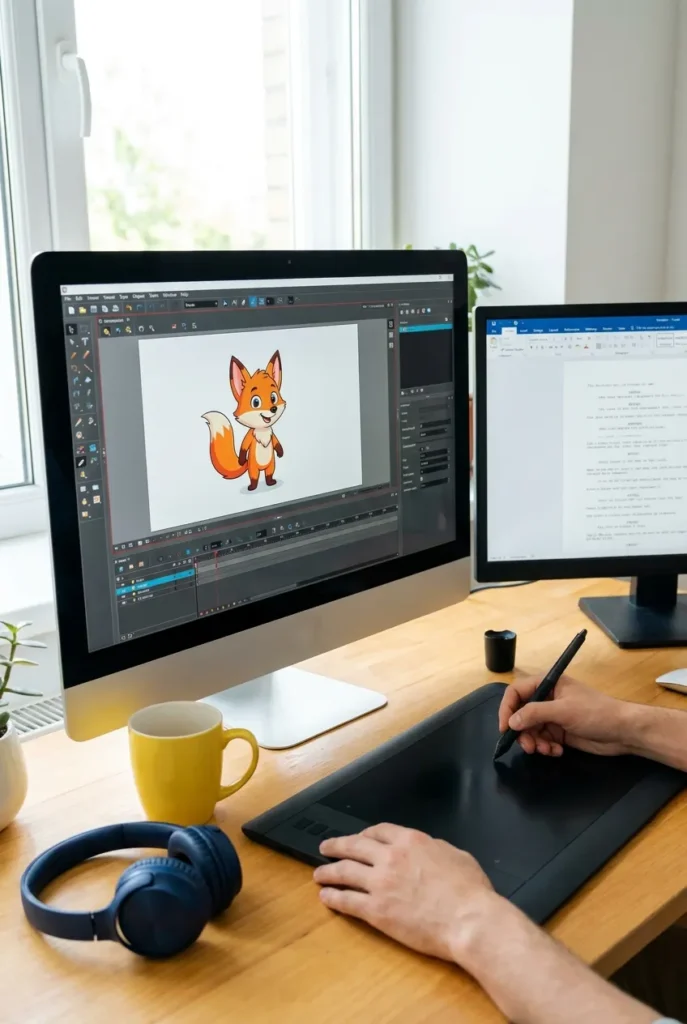
The AI Tool Stack That Powers Faceless Channels in 2026
Most faceless creators we know run some version of this stack. Costs are current as of May 2026; verify the latest pricing on each tool’s site before signing up.
Scripting and research. ChatGPT Plus at $20 a month, or Claude Pro at $20 a month. Both handle scripts, research summaries, and hook brainstorming.
Voiceover. ElevenLabs starts at $5 a month (Starter tier) and scales to $22 (Creator tier) for commercial use rights. PlayHT and Murf are alternatives in a similar price range.
Visuals. Canva Pro at $15 a month, or Adobe Express at $10. For AI-generated images, Midjourney starts at $10 a month (Basic) and Ideogram has a free tier plus paid plans.
Editing. Free options include CapCut and DaVinci Resolve. Paid options run Premiere Pro ($23 a month) or Final Cut Pro (one-time $300).
Stock footage and music. Pexels and Pixabay are free. For premium, Artgrid and Epidemic Sound run around $15 to $25 a month combined.
Total starter stack: $60 to $100 a month. Mid-tier: $120 to $200 a month. Budget the cost into your revenue projections from day one. AI output quality varies and platform policies on AI-generated content are still evolving, so always check the latest YouTube and FTC guidance before scaling.
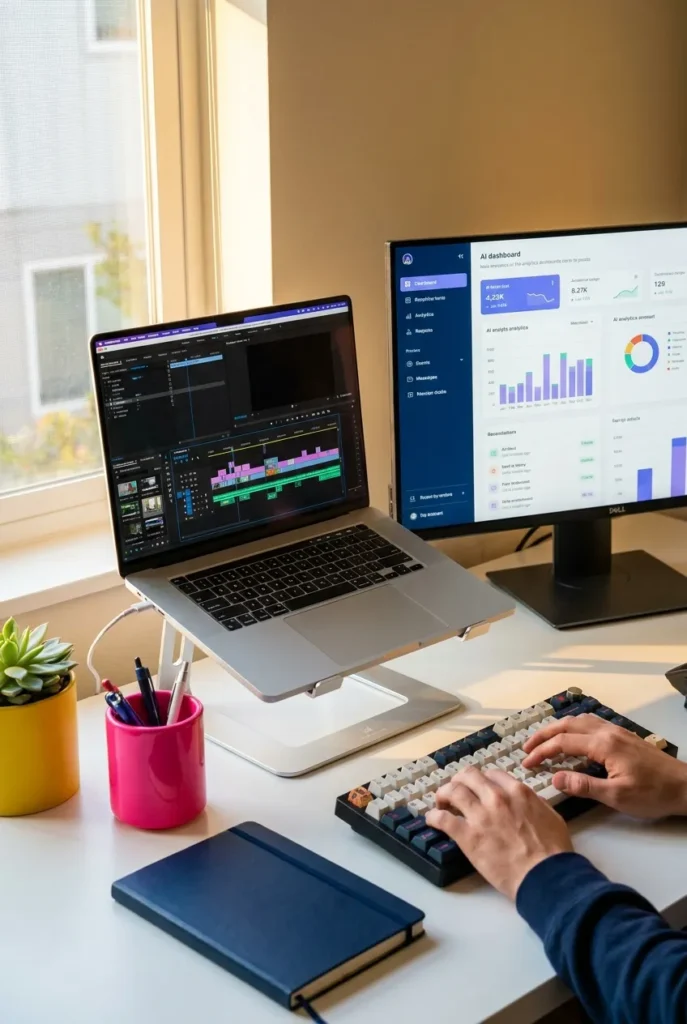
Realistic Earnings Timeline (Months 1, 3, 6, 12)
Time to be honest about the math.
Month 1. Revenue: $0. You’re not monetized yet. Expenses: $60 to $100 in tool stack. Net: negative.
Month 3. Revenue: $0 to $50 (if monetized via Shorts views early). Most channels are not yet at YPP threshold. Expenses: same tool stack. Net: still negative.
Month 6. Revenue: $50 to $500 for channels that broke through to monetization. Expenses: same stack. Net: roughly break-even to small profit.
Month 12. Revenue: $200 to $3,000+ for channels that found their audience, with massive variance. Expenses: same stack plus possibly outsourcing scripts or editing at $50 to $300 a video.
This is honest faceless creator math. Most channels that quit do so in months 3 to 5 because the revenue gap feels endless. The ones that push through to month 9 or 12 often start compounding fast. Treat your first year as research and development. For income streams that pay faster while you wait for the channel to grow, we cover several in our proofreading jobs guide that pays $25+ an hour.
How Many Views You Need for $1,000, $5,000, and $10,000 a Month
A common question from People Also Ask. Quick math, using a blended RPM of $5 (low estimate) to $15 (mid-tier finance or AI channel).
| Monthly AdSense Goal | At $5 RPM | At $10 RPM | At $15 RPM |
|---|---|---|---|
| $1,000 | 200,000 views | 100,000 views | 67,000 views |
| $5,000 | 1,000,000 views | 500,000 views | 333,000 views |
| $10,000 | 2,000,000 views | 1,000,000 views | 667,000 views |
These are AdSense-only estimates. Add affiliate income and digital product sales and the view threshold drops sharply. A finance channel making $4 RPM in AdSense but $8 RPM in blended income (ads plus affiliates) hits $10K a month at roughly 1.25 million views.
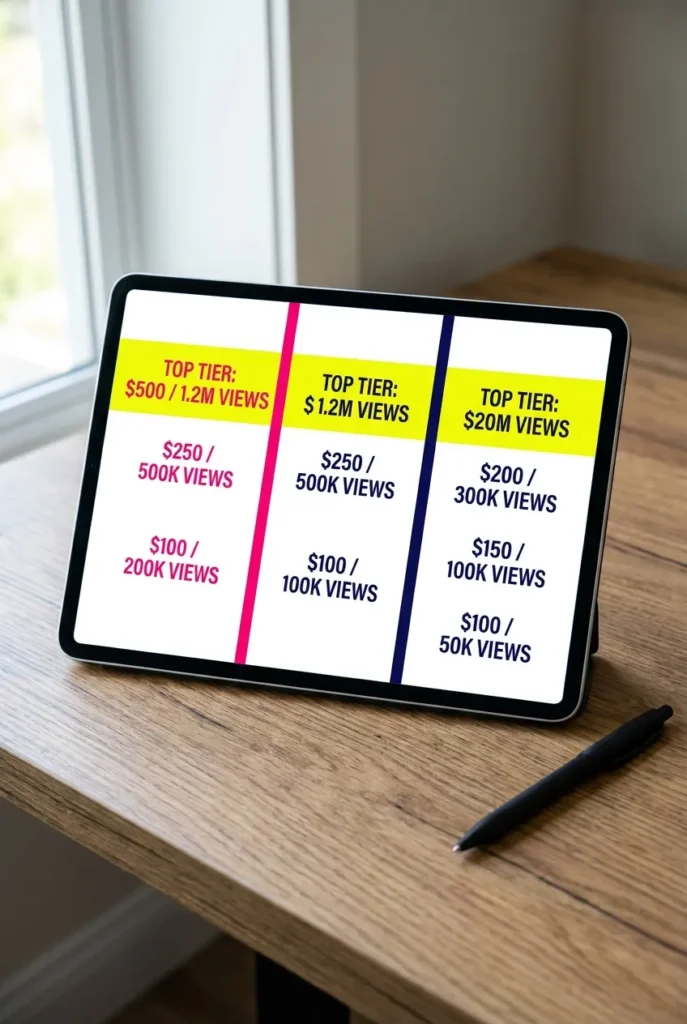
Pinterest Distribution: The Underused Faceless YouTube Hack
Here’s an angle most competitor articles skip entirely. Faceless YouTube channels and Pinterest are a near-perfect distribution pair.
For every YouTube video you publish, create 3 to 5 Pinterest pins linking to the video. Use bold, vertical (1000×1500) pin designs in Canva. Apply a strong title hook with a number or dollar amount. Pin to relevant boards on a cadence of 2 to 5 fresh pins a day.
The math: even a moderately performing Pinterest account can drive 5,000 to 20,000 monthly outbound clicks to your YouTube videos. Those clicks count as YouTube external traffic, which the algorithm reads as a positive signal. Pinterest works particularly well for cooking, finance, motivation, true crime, and wellness niches. It works less well for kids’ content, hardcore tech, and business case study channels.
A note on Pinterest itself: the algorithm changes constantly, and tactics that worked in 2024 may not work today. Verified accurate as of May 2026.
Common Beginner Mistakes (Avoid These)
We’ve watched a lot of channels stall in their first six months. The reasons cluster.
Picking a niche based on RPM alone. A $25 RPM means nothing if you can’t produce 10 videos before burning out on the topic. Pick a niche you can produce 50 videos in.
Not labeling AI-generated content. YouTube requires disclosure of meaningful synthetic content. Skipping this can hurt your channel.
Thin scripts. ChatGPT-generated first drafts feel polished but watch like cardboard. Always rewrite for voice and add specifics.
No thumbnail strategy. A bad thumbnail kills the click. Spend 20 minutes per thumbnail minimum until you have a winning formula.
Quitting at month 4. This is the most common failure point. The data shows month 6 to 9 is when most monetized channels start to compound.

Frequently Asked Questions
What is the best niche for YouTube in 2026?
Personal finance, AI tools, and business case studies lead on RPM. Cooking, motivation, and true crime lead on viewer engagement and Pinterest distribution. The best niche is the one where your interest overlaps with one of the higher-RPM categories you can sustain for 50+ videos.
What is the best niche for faceless YouTube specifically?
For a beginner with no track record, AI news and tools is the lowest barrier to entry with reasonable RPM and Pinterest cross-promotion potential. For a more patient creator, personal finance has the best long-term unit economics.
How many views do you need to make $10,000 a month on YouTube?
At a $5 blended RPM, you’d need 2 million monthly views. At $15 RPM (finance, AI), you’d need around 667,000. Add affiliate income and digital products, and that view threshold can drop by 30% to 50%.
Can a faceless YouTube channel actually make money?
Yes, but not quickly. Realistic timelines run 6 to 12 months to first meaningful revenue, with monthly AdSense in the $200 to $3,000 range by month 12 for channels that found their audience. Stacking affiliate income and digital products is where five and six-figure months come from.
Do I need to pay self-employment tax on my YouTube income?
If your net YouTube earnings cross $400 in a year, you owe self-employment tax in the US. AdSense and affiliate income are reportable on Schedule C, and platforms typically issue 1099-NEC or 1099-MISC forms above their reporting threshold. Consult a qualified US CPA for your situation.
What’s the cheapest AI tool stack for a faceless channel?
Around $60 a month: ChatGPT Plus ($20), ElevenLabs Starter ($5), Canva Pro ($15), free editing in CapCut or DaVinci Resolve, and free stock footage from Pexels and Pixabay. Mid-tier runs $120 to $200 a month.
Can I use AI voices on YouTube without disclosure?
YouTube requires disclosure of meaningful synthetic or altered content, including AI voiceovers in some contexts. The exact rules are evolving. Always check YouTube’s current synthetic content disclosure policy and FTC guidance before publishing.
The Honest Takeaway
Faceless YouTube niches that make money in 2026 are real, but the path is longer than most articles suggest. The creators winning right now are the ones who pick a high-RPM niche they can sustain for a year, stack distribution channels (especially Pinterest), layer affiliate income on top of AdSense, and treat their channel like a small business with real expenses on the books.
Which niche on the list above made you sit up straighter? If you’re between two, lean toward the one with higher Pinterest cross-promotion potential. The traffic compound effect is worth more than 2 extra RPM points.
What’s your first video idea going to be?